



May 2026

Wavelength Electronics — stabilizing semiconductor laser wavelength, power, current & linewidth with low noise electronics

At Wavelength Electronics, we stabilize semiconductor laser wavelength, power, current, and linewidth with ultra-low-noise electronics. We partner with leading researchers and manufacturers to solve complex challenges using advanced controllers, deep engineering expertise, and responsive support.

Focused on high performance, we bring 30+ years of precision engineering and reliable manufacturing to help you push laser applications further—and improve lives in the process. If noise, instability, or drift is holding you back, it’s time for a better partner.

SUBSCRIBE TO OUR NEWSLETTER FOR TIPS, TECHNIQUES & PRODUCT UPDATES.
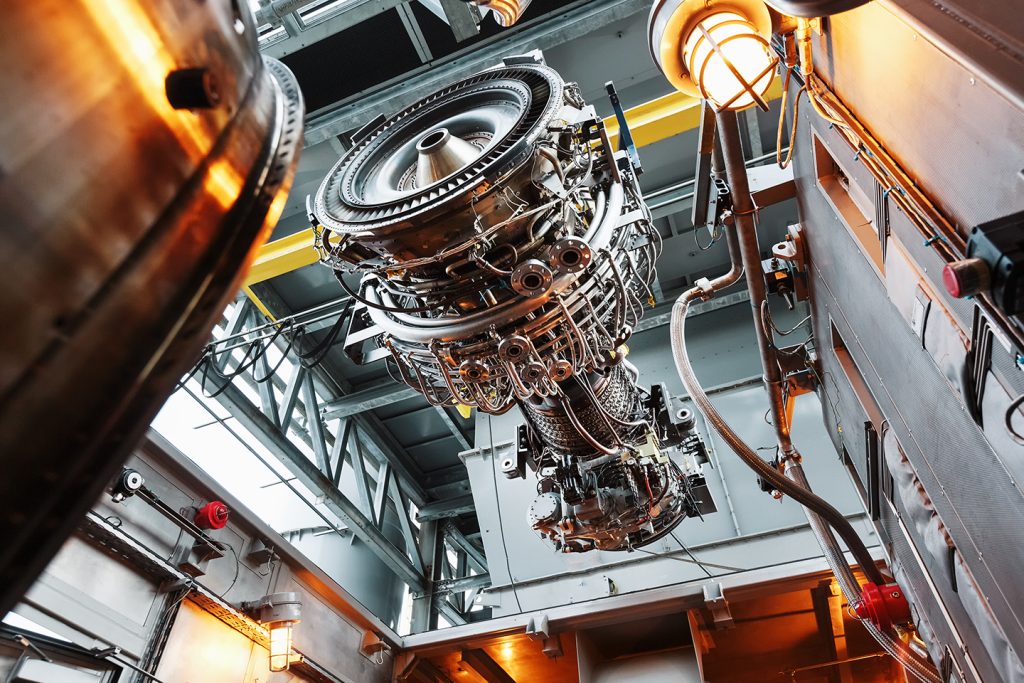
Turn complex combustion diagnostics into actionable data—faster.

In the global effort to decarbonize the aviation, marine, and power generation sectors, accurate combustion diagnostics have become a critical priority—but traditionally require cumbersome, tailor-made hardware. Researchers from the UK developed a novel Chemical Species Tomography (CST) system: a scalable, modular sensor array capable of high-speed, 2D mapping of gas-turbine exhaust plumes.

In high-speed tomography, even minor laser instability can create errors amplified during image reconstruction. Stable laser output during modulation and frequency scanning is essential for accurate transmission data and dependable results.

Wavelength Electronics’ LDTC2/2E helped researchers capture real-time exhaust images at 250 frames per second with precise wavelength stability, low-noise current control, and ultra-stable temperature regulation. The result: sharper measurements of H₂O and heat distribution, faster optimization, lower emissions, and more reliable performance in demanding aerospace and energy applications.
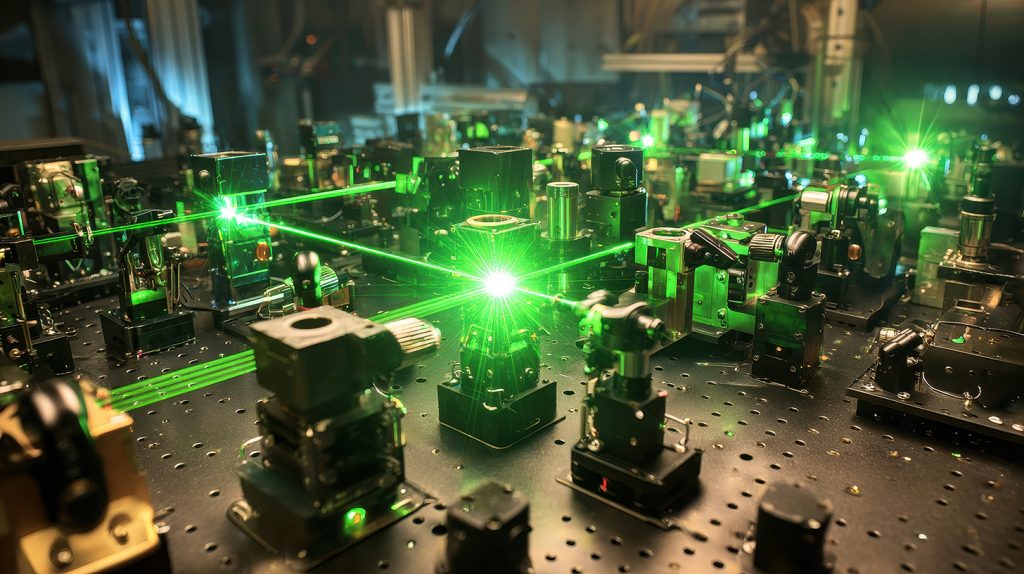
NEW APP NOTE: Get Cleaner Spectra & More Reliable Data

Spectroscopy sits at the core of modern analysis, revealing how light interacts with matter to identify, characterize, and monitor materials with remarkable precision. From research labs to field deployments, it underpins everything from chemical identification to climate science and medical diagnostics.

Whether measuring atmospheric methane at parts-per-billion levels or detecting subtle biochemical changes in tissue, one factor remains constant: performance depends on stable, low-noise laser control.

Our latest App Note highlights the fundamentals of spectroscopy, and how precision laser control directly impacts what you measure, whether you’re analyzing trace gases, characterizing materials, or running high-resolution biomedical diagnostics.
As systems become more sensitive and field-deployable, the margin for error shrinks.

That’s where Wavelength Electronics comes in — with solutions engineered specifically for spectroscopy, combining ultra-low noise current drivers, high-stability temperature control, and tightly integrated subsystems to reduce:

  • Wavelength drift
  • Signal noise and instability
  • Linewidth broadening

From component-level drivers to fully integrated instruments, you can match the solution to your architecture without compromising performance. The result: more repeatable measurements, cleaner signals, and confidence in long-duration or high-resolution applications.

Explore how precision laser electronics are enabling the next generation of spectroscopy systems, and why control fidelity is the difference between signal and noise.

Wavelength Electronics — supporting advances in biomedical sensing

Advances in biomedical sensing demand laser stability far beyond what traditional assay tools can offer. From rapid biomolecule detection to microscale diagnostics, precise current control is essential. Wavelength Electronics’ WLD laser diode drivers deliver the stability needed for these next-generation platforms.

  1. Biomolecular Detection
    Virus-laser research has shown that viral materials can serve as part of the lasing medium, enabling fast, sensitive identification of specific biomolecules. These systems rely on constant current, stable wavelength, and controlled modulation. The WLD provided the low-noise, precisely modulated drive current required to maintain reliable laser emission throughout detection.
  2. Optofluidics & Microfluidics
    Infrared diode lasers are widely used in optofluidic and microfluidic setups for cell manipulation, thermal cycling, and PCR— where tight control over optical power is essential. Stable, well-regulated laser power ensures both sample viability and consistent thermal cycling performance. The well-regulated output from the WLD driver ensures precision operation in these sub-milliliter environments.

Wavelength Electronics supports biomedical innovation with laser drivers engineered for performance, stability, and seamless integration into advanced optical platforms.

SUBSCRIBE TO OUR NEWSLETTER FOR TIPS, TECHNIQUES & PRODUCT UPDATES.

We invite you to contribute topic suggestions, questions, and general feedback.
Wavelength will incorporate as much reader input as possible.
Click to Submit

Environmental Monitoring

Environmental Monitoring

Mobile atmospheric sensing demands laser stability in places where benchtop instruments simply can’t go. From ground vehicles to fixed-wing aircraft, compact laser-based systems rely on precise, low-noise drivers to resolve trace gas concentrations at ppb levels. Wavelength Electronics’ precision laser drivers support these platforms with the stability needed for high-fidelity field measurements.

  1. Ammonia Monitoring
    Researchers developed a lightweight, battery-powered open-path ammonia sensor. Deployed on both a ground vehicle and a fixed-wing aircraft, the system reached hard-to-access locations and delivered ppb-level sensitivity for urban combustion studies and agricultural emission monitoring. The FL500 laser driver provided the laser stability required for accurate, autonomous operation in mobile environments.
  2. Methane Sensing via Unmanned Aerial Systems
    A mid-infrared methane-sensing instrument was integrated into unmanned aerial platforms to capture concentration measurements at varying altitudes and positions. With strict weight and power constraints, the system relied on compact, precision control electronics. The LDTC controller, utilizing the FL500 driver, enabled stable operation, supporting repeatable and robust methane measurements during flight.

Wavelength Electronics supports next-generation environmental monitoring with compact, low-noise laser drivers engineered for high sensitivity and mobile deployment.

Exploring mobile or autonomous gas-sensing designs? We’re here to help integrate the right driver into your platform.

Microfluidics

Microfluidics

Advances in biomedical sensing demand laser stability far beyond what traditional assay tools can offer. From rapid biomolecule detection to microscale diagnostics, precise current control is essential. Wavelength Electronics’ WLD laser diode drivers deliver the stability needed for these next-generation platforms.

  1. Biomolecular Detection
    Virus-laser research has shown that viral materials can serve as part of the lasing medium, enabling fast, sensitive identification of specific biomolecules. These systems rely on constant current, stable wavelength, and controlled modulation. The WLD provided the low-noise, precisely modulated drive current required to maintain reliable laser emission throughout detection.
  2. Optofluidics & Microfluidics
    Infrared diode lasers are widely used in optofluidic and microfluidic setups for cell manipulation, thermal cycling, and PCR— where tight control over optical power is essential. Stable, well-regulated laser power ensures both sample viability and consistent thermal cycling performance. The well-regulated output from the WLD driver ensures precision operation in these sub-milliliter environments.

Wavelength Electronics supports biomedical innovation with laser drivers engineered for performance, stability, and seamless integration into advanced optical platforms.
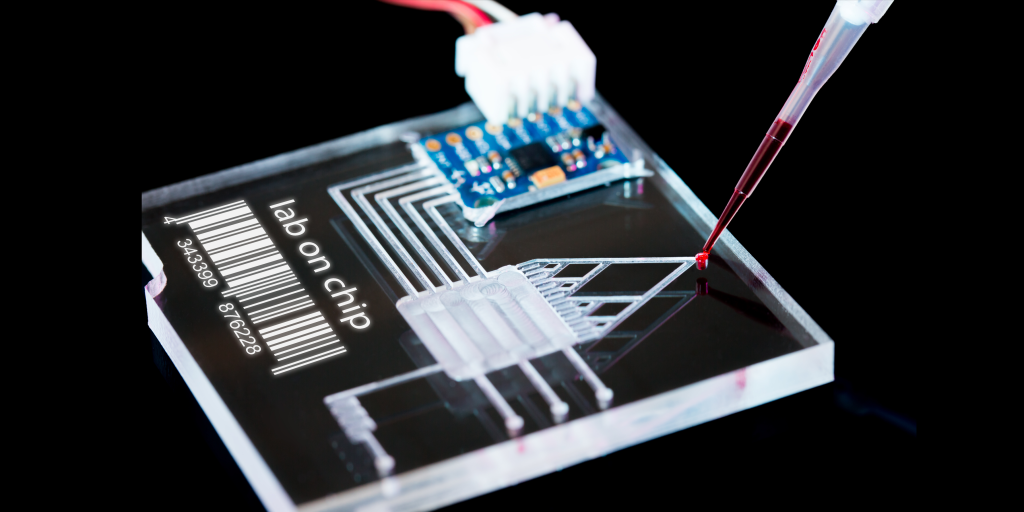
Curious how WLD drivers could support your biomedical system? Let’s connect.

FAQ1001

QUESTION

What does the Compliance Voltage specification in laser diode drivers mean?

ANSWER

All of our drivers are current sources. This means the current level is the focus of the control system. The voltage across the output device (for a purely resistive test load) will develop according to Ohm’s Law:

Voltage = Current * Impedance

The voltage varies with the resistance of the load. The current source does not force a particular voltage across the output device. The compliance voltage specification indicates the maximum voltage that can be provided to the output device at full current, not the voltage that will be delivered.

When using an OEM driver, the power supply is not included. The compliance voltage is also limited by the voltage of the power supply that is chosen.

For example, Wavelength’s PLD Series laser diode drivers have a maximum Compliance Voltage of 3 V with a 5 VDC power supply voltage and 28 V with a 30 VDC power supply voltage. This means that the PLD uses 2 V in the control electronics, so the load must require 2 V less than the input voltage to run. The 3 V or 28 V specification is the maximum voltage that can be provided to the output device, not the voltage that will be delivered.

For laser diodes, the Shockley Diode Equation or the applicable V-I curve is required to find the nonlinear forward voltage as a function of current and the actual physics of the specific laser diode. The compliance voltage calculation can be made with nonlinear devices, such as diodes, once an appropriate value for the forward voltage is determined. Refer to your laser diode datasheet for the expected voltage.

Trace Gas Sensing

Trace Gas Sensing

Detecting trace gases in the parts-per-billion or parts-per-trillion range requires far more precision than conventional sensing approaches can deliver. For applications where sensitivity and selectivity are critical, advanced Quantum Cascade Laser (QCL) systems paired with high-stability drivers provide a superior solution.

  1. Field-Deployed Trace Gas Detection
    Environmental monitors, industrial leak-detection systems, and semiconductor fabs need high stability in the field despite temperature changes, vibration, and other real-world challenges. Precision QCL drivers enable rock-solid wavelength modulation spectroscopy (WMS) and absorption spectroscopy, allowing engineers to identify target species with the specificity needed to spot leaks or contaminants long before they become production-stoppers.
  1. High-Fidelity MIR Spectroscopy
    Mid-infrared (MIR) absorption spectroscopy and light-induced thermoelastic spectroscopy (LITES) rely on excellent wavelength stability and low-noise modulation to resolve subtle spectral features. High performance QCL drivers supply the required fine tuning, drift control, and modulation repeatability, ensuring high-quality data even when signals are exceptionally weak. These capabilities are essential across a wide range of applications, including hydrogen fuel cell diagnostics, reactive gas monitoring in semiconductor processes, and atmospheric analysis for planetary exploration.

Wavelength Electronics supports these demanding applications with high-stability QCL laser drivers (bit.ly/4dANgMW) engineered specifically for MIR sensing and spectroscopy applications. Designed for stability, reliability, and precise modulation, our drivers integrate seamlessly into both laboratory systems and rugged field-deployable platforms.

If you have a trace-gas sensing challenge, our team can help you optimize the laser and driver stack for your spectroscopy system.

Partnership with EKSPLA Electronics: Great engineering knows no borders

New partnership with EKSPLA Electronics announced!

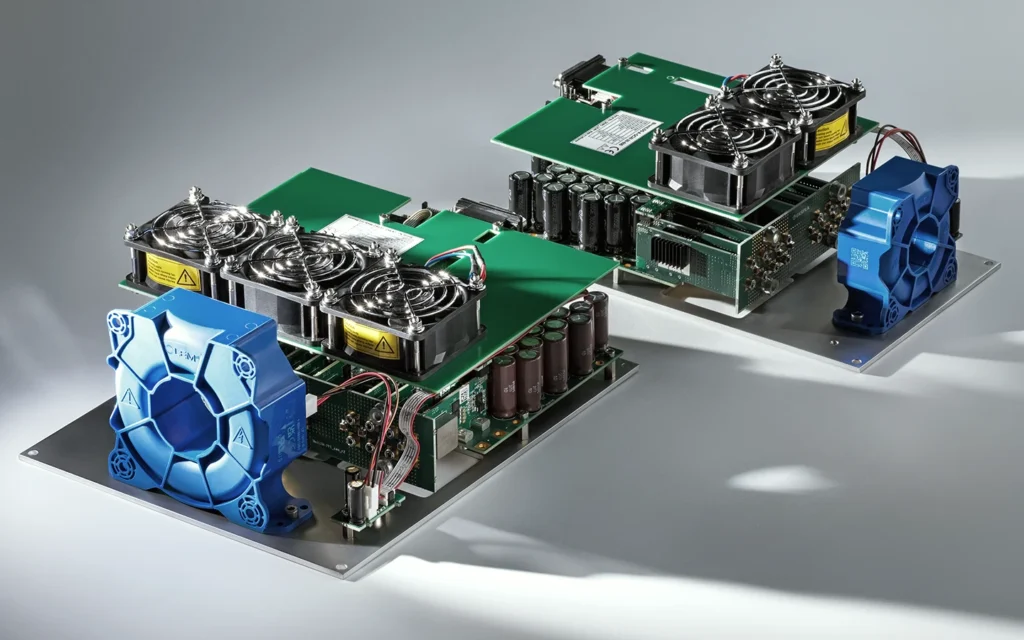
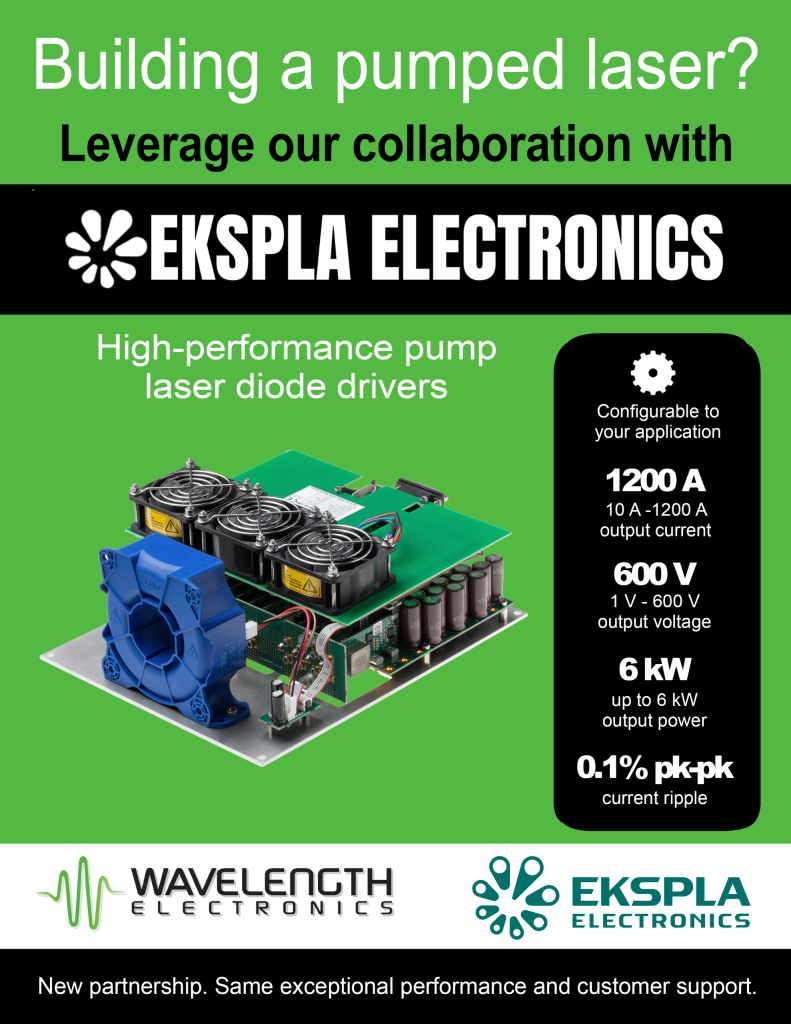
At Wavelength, we know that great engineering knows no borders, but accessing it should be seamless. We are thrilled to announce a new partnership with EKSPLA, a company whose name is synonymous with cutting-edge laser technology. Starting today, Wavelength Electronics will be the US source for EKSPLA’s uniLDD high power laser diode drivers.

The uniLDD is a unique piece of equipment. It was designed by the EKSPLA team to solve the complex thermal and current control challenges found in diode-pumped solid-state lasers or in a wide range of diodes (single emitters, bars, stacks, VCSELs, and LEDs). It is a driver born out of necessity and refined by experience while providing currents from 10A to 1200A with compliance voltages varying from 1V to 600V.

By combining EKSPLA’s manufacturing excellence with Wavelength’s local support and distribution, we are making it easier than ever for US engineers to integrate this robust technology into their own labs and OEM systems.

We look forward to seeing what you build with them.

Wavelength Electronics officially certified as a Woman-Owned Small Business

Wavelength Electronics, led by CEO Mary Johnson, is now officially certified as a Woman-Owned Small Business.

Wavelength Electronics, founded by Mary Johnson in 1993, has thrived under her engineering-driven leadership. After earning her Electrical Engineering degree from Montana State University, Johnson launched the company and stepped into the CEO role in 2002, steering Wavelength with a commitment to photonics innovation that significantly improves lives.

Known for fostering an engineering-first culture, Johnson has built a collaborative, tight-knit team with in-house manufacturing, customized design support, and responsive customer service at its core. She remains deeply connected to industry advancement through the Montana Photonics & Quantum Alliance (MPQA) and is leading Wavelength into emerging fields such low noise, low current spectroscopy and medical applications.

Rooted in Bozeman and dedicated to her community’s technical networks, Johnson continues to bring hands-on engineering passion to every stage of photonics development. Wavelength Electronics partners with high-tech researchers and developers to release innovative laser systems. Explore how Wavelength Electronics can accelerate your laser innovations at: https://www.staging.teamwavelength.com/capability-statement/.

LD250mTC5 Press Release

Achieve Greater Stability in Spectroscopy and Precision Metrology

Are you working in spectroscopy or precision metrology and need improved stability for low-power laser diodes?

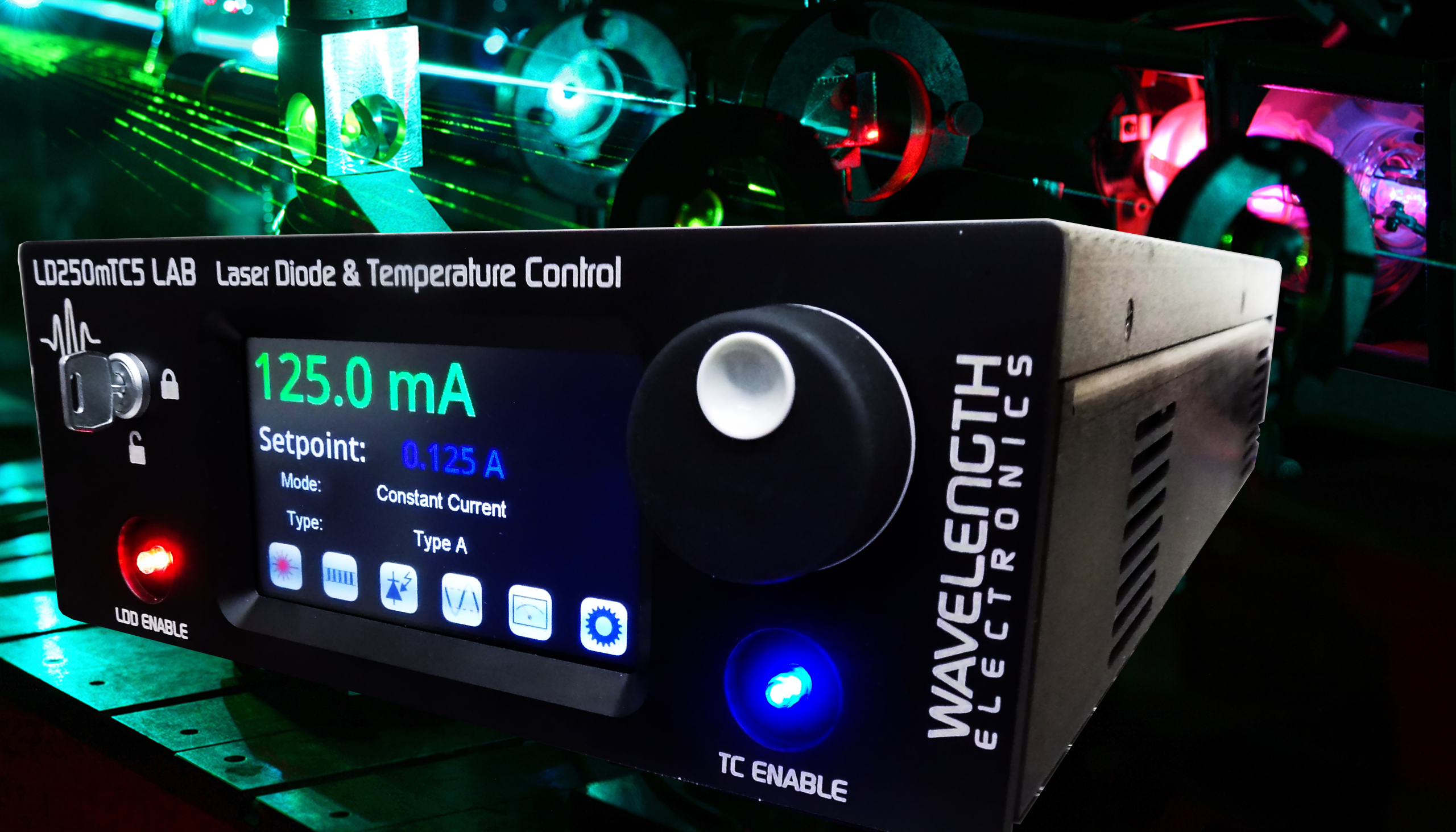
Introducing the LD250mTC5 LAB Series Laser Diode with Temperature Control Instrument — a compact, touchscreen-controlled solution designed for advanced experiments requiring exceptional stability and precision.  With a 250 mA laser diode current capacity, this instrument delivers low noise, stable output power, and consistent wavelength performance. It’s engineered to minimize fluctuations and ensure reliable results over time.

Key Performance Highlights:

  • Laser Drive Noise: Cumulative current noise of just 3 μA
  • Bandwidth: 450 kHz modulation input (CC mode)
  • Temperature Control: Up to 5A output with stability better than 0.0009°C
  • PID Control: IntelliTune® technology for optimized thermal performance

The intuitive touchscreen interface simplifies setup and operation, while broad compatibility with most sensor types and laser diode/photodiode combinations makes integration seamless.

Built-In Protections for Your Lab Equipment:

  • Brick-Wall Never-Exceed current limits
  • Short-circuit disable
  • Active and passive interlocks
  • Load failure protection
  • Over/under-temperature safeguards
  • Automatic laser shutdown in the event of TEC errors

Wavelength Electronics partners with high-tech researchers and manufacturers to successfully complete strategic projects through fully featured controllers, engineering expertise, and responsive tech support.  Discover how the LDTC LAB Series can elevate your application. Contact us at 406-587-4910, or email sales@teamwavelength.com to learn more.

A Note About Tariffs

Over the past few months, we’ve been keeping a close eye on the ripple effects of new international trade regulations. At first, the impact was minimal. But gradually, we began to see costs working their way through every part of the supply chain. We did what we always try to do: absorb as much as possible, look for efficiencies, and keep things running smoothly without passing the burden along.

As time went on, it became clear that some of these changes were going to stick around. Because of this, we’re introducing a tariff-related surcharge on certain orders, effective immediately. We know this isn’t welcome news, and it’s not a decision we made lightly.

We will keep you informed as changes continue to unfold.

We’re committed to being transparent, keeping you informed, and continuing to deliver the quality and service you count on, even as we adjust to a shifting global landscape.

NEW Case Study: Cryogen-Free Solution for Terahertz Absorption Spectroscopy

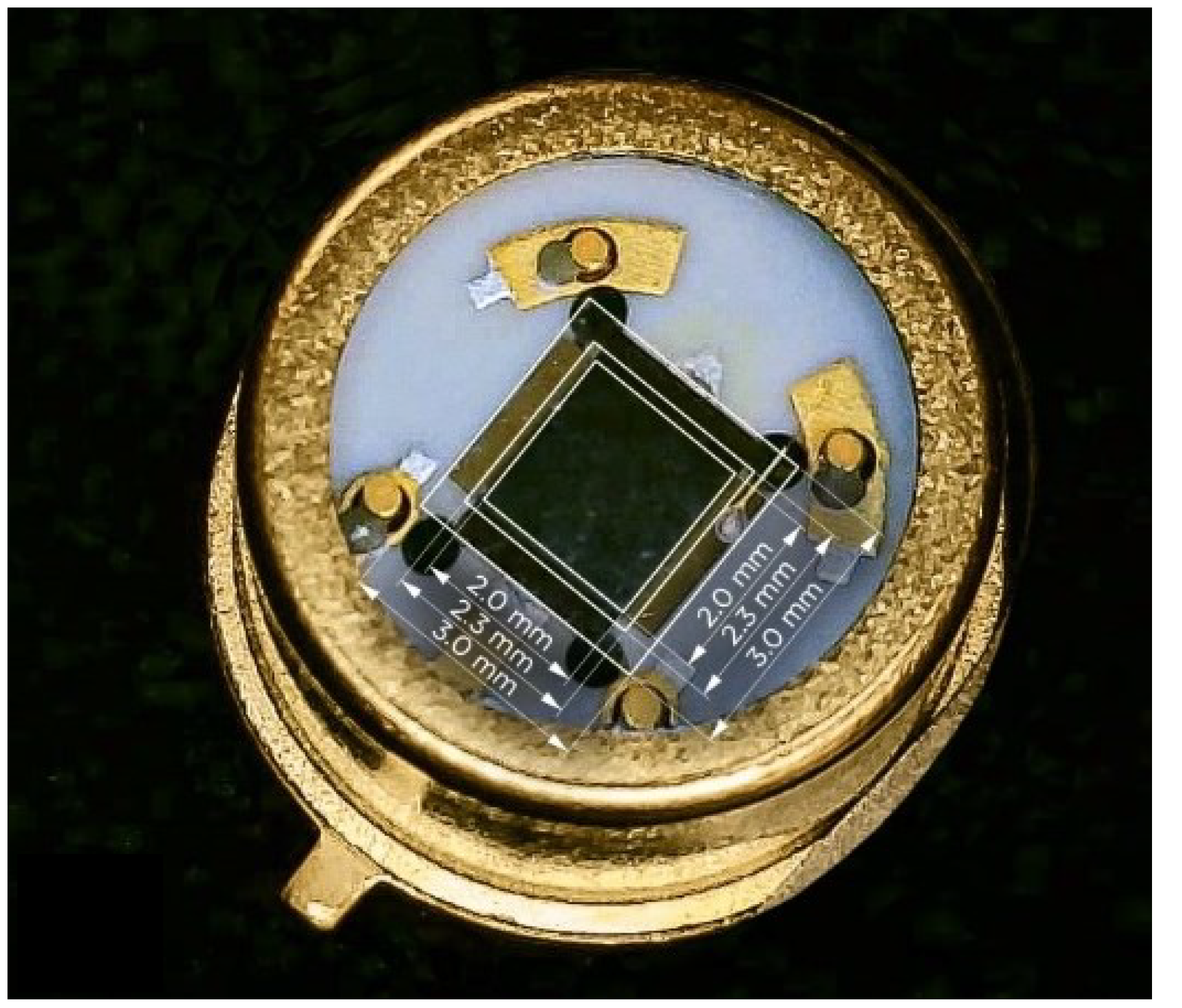
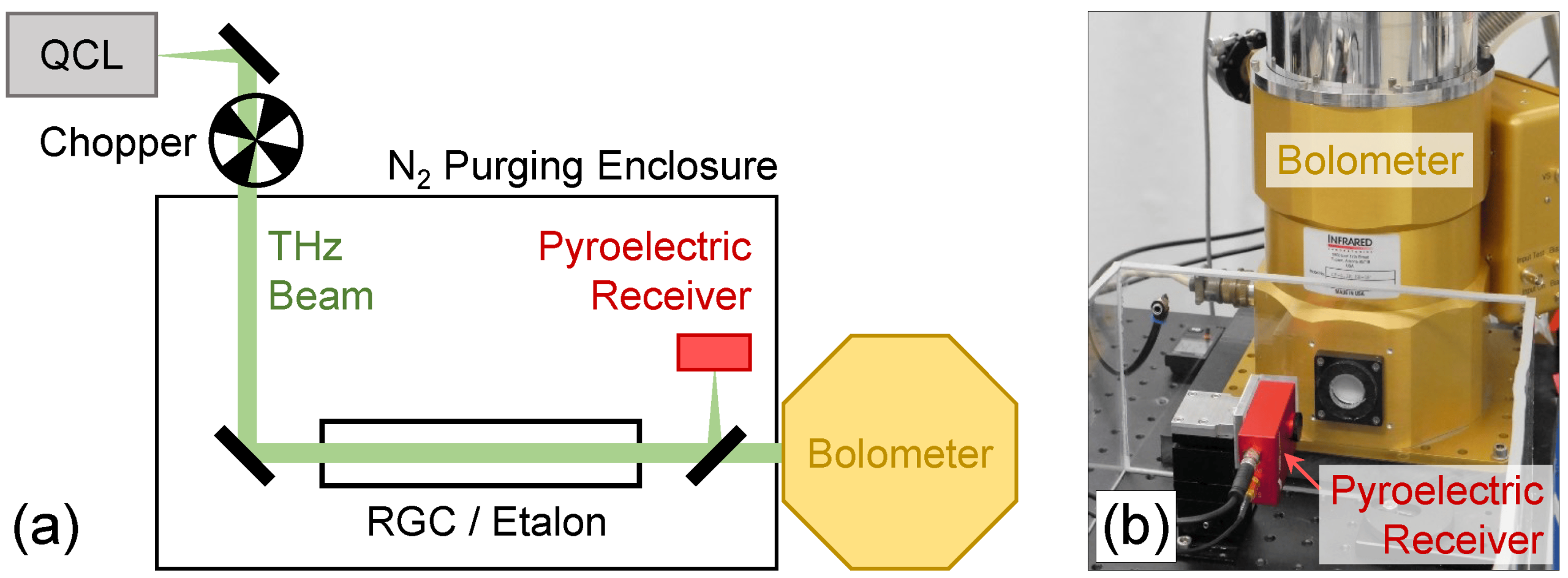
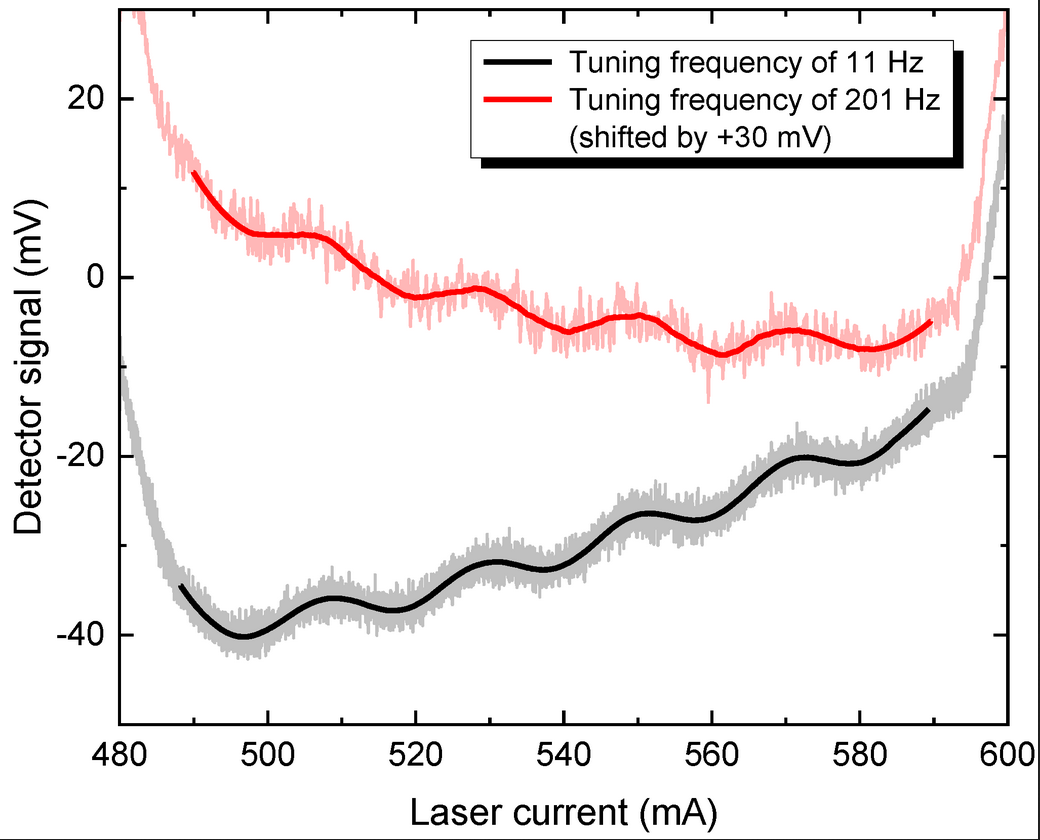
Researchers from Germany have developed a high-speed pyroelectric receiver using a LiTaO3 pyroelectric detector as a cryogen-free solution for terahertz (THz) absorption spectroscopy measurements. This receiver can record spectra at frequencies up to 281 Hz without introducing artifacts into the observed spectral absorption profile. By operating at room temperature, the compact system provides a practical and efficient alternative to cryogenically cooled detectors, making it a reliable platform for THz spectroscopy, offering robust performance without the need for complex cooling infrastructure.

Cryogenic cooling has long been the standard in high sensitivity detection systems, particularly in applications requiring the measurement of low-energy signals, such as terahertz (THz) spectroscopy.  However, cryogenic systems are complex, expensive, and require continuous maintenance, including replenishing cooling agents. Cryogen-free detectors offer a more practical, compact, and cost-effective solution, eliminating the need for cumbersome cooling systems.

To optimize the performance and testing of the high-speed LiTaO3 pyroelectric receiver, researchers integrated the innovative capabilities of Wavelength Electronics’ QCL1000 OEM driver. Given the significant impact of temperature and noise on the pyroelectric receiver’s performance, ultra-low noise current drivers were required. Wavelength Electronics’ QCL1000 OEM driver operates with a low noise floor, maintaining an output current RMS noise of less than 0.7 μA at operating frequencies up to 100 kHz. This level of noise reduction is vital for accurately capturing the rapid spectral features without introducing artifacts, thereby ensuring a clean spectral absorption profile.

Continuous ramping of the laser current was required for fast measurements with high spectral resolution. Because the spectral resolution of the system is given by the laser linewidth, the laser drive must maintain a narrow linewidth from the QCL. The QCL1000 OEM driver achieved this with a narrow linewidth of 2 x 10⁻⁴ cm-1, approximately 6 MHz. With a typical stability of around 10 ppm, the QCL1000 OEM driver ensures optimal operating conditions for both the THz QCL and the pyroelectric receiver, significantly enhancing measurement capabilities. This integration has proven instrumental in achieving high-speed data acquisition rates of up to 281 Hz without compromising the integrity of the recorded spectra.

The complete case study is available as CS-LD13.