USBKIT QuickConnect Software version 2.6.5
software

software

We are sure that once you experience the precision, stability and ease-of-use of our touchscreen instruments, you’ll be convinced that they are ideal for your high performance application. We are offering a year-end promotion to test drive any instrument for 30 days for free.
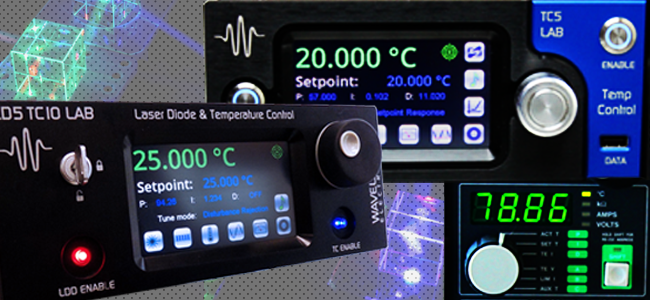
Choose a TC LAB precision temperature controller with Intellitune®, a LDTC LAB laser driver with temperature control, or our patented, low noise QCL LAB.
Available for North American deliveries only.

Wavelength Electronics turned 30 in October! Since 1993, Wavelength Electronics has solved electronics problems in photonics systems from our factory in Bozeman, Montana. We started with driving laser diodes and controlling their temperatures. Our first products were OEM modules and components that laser engineers could design into their own systems. The vision was to provide benchtop instrument performance in a small package.
We’ve maintained our focus on LD safety and evolved to offering only high-performance solutions – very stable current, very low noise, very stable wavelength through temperature stabilities limited only by sensor precision.
We’re committed to researching new technologies as they emerge, and constantly expanding our capabilities. At present, our CW laser diode drivers can modulate in the MHz range. We can scale the output currents to support VCSELs at the low end and pump diodes at the high end. Our temperature controllers easily achieve mK stability – regardless of environmental conditions. We offer both linear and higher efficiency PWM output stages.

We have chosen to focus on high performance. Our customers leverage our expertise to gain a competitive advantage and develop solutions that significantly improve lives.
We believe a design is only finished when it can be manufactured repeatedly with high yield. In addition to our knowledge of circuitry, we researched best-in-class electronics manufacturing practices. We’ve invested in automated production equipment – two SMT lines, a selective solder, AOI. We’ve developed procedures and protocols in our Quality System to consistently achieve a return rate of less than 0.1%. From our humble beginnings with plate-through resistors, we’ve embraced building with the smallest of SMT components – 0201s, BGAs. We also offer our assembly services to local companies. Our team members pride themselves on finding improvements, integrating new technologies, and contributing to our clients’ success.
Where are we going? Eventually we will be able to drive any semiconductor laser made in all operating modes.
For now, we are introducing Custom Engineering Services. Custom circuit designs that perfectly fit the system need – multiple channels, compact size, any combination of form fit and function. Learn More.

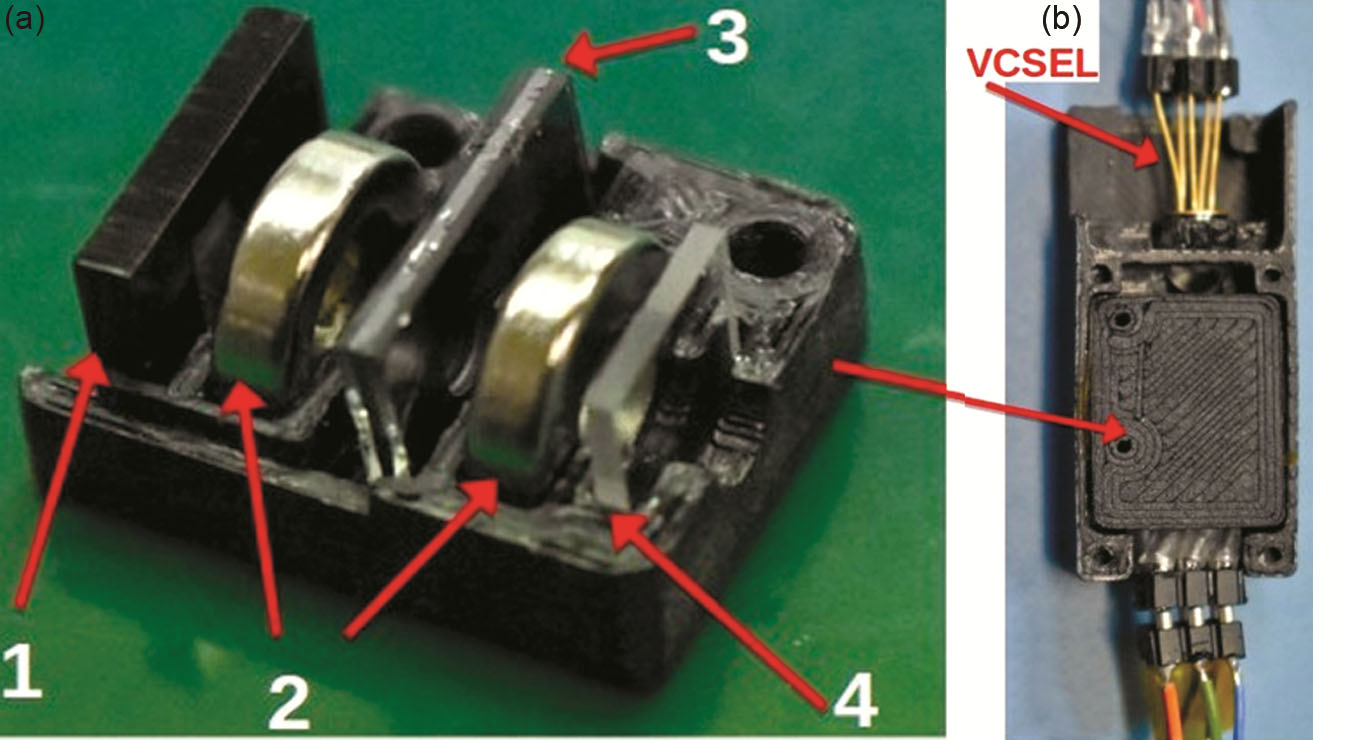
Researchers from the Indian Space Research Organization in Bengaluru, India have developed and demonstrated the absorption spectroscopic capabilities of a chip-scale Rubidium (Rb) atomic vapor cell using a thermoelectric cooler integrated VCSEL light source in a magneto-optic package. The custom 3D-printed design provides real time analysis of spectral data. With over 600 hours of data, absorption resonance lines were recorded and analyzed for transitions 85Rb and 87Rb with absorption amplitude and FWHM data agreeing with known literature values.

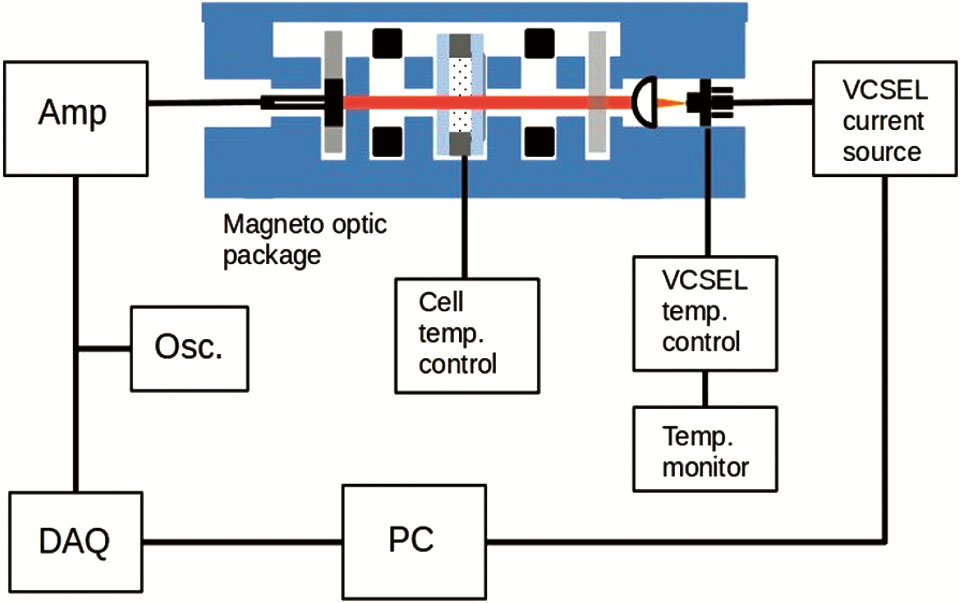
For the compactness and wavelength stability of the design, both the size and stability of the temperature controller are critical in the success of the absorption spectroscopy study. The VCSEL diode required high temperature stability due to the center frequency shifting with change in temperature. To meet these requirements, researchers used Wavelength Electronics’ WTC3243 Temperature Controller.
This magneto-optic Rb atomic cell package proves potential for atomic sensors, particularly in space borne applications or payloads.
The complete case study is available as CS-TC08.

Complex chemical and biological reactions require fast (sub-second) spectroscopy with high spectral resolution. Researchers from Switzerland have developed a Fourier Transform (FT) spectrometer designed around a custom, continuous rotation scanning mirror, enabling millisecond acquisition times while maintaining high spectral resolution in the sub-GHz range. The demonstrated system incorporates the advantages of both FT spectroscopy as well as dual-comb spectroscopy. This design not only uses a single frequency comb for dual-comb spectroscopy, but can prove useful in a variety of spectroscopy applications where high speed, large optical bandwidth, and high spectral resolution are desired.
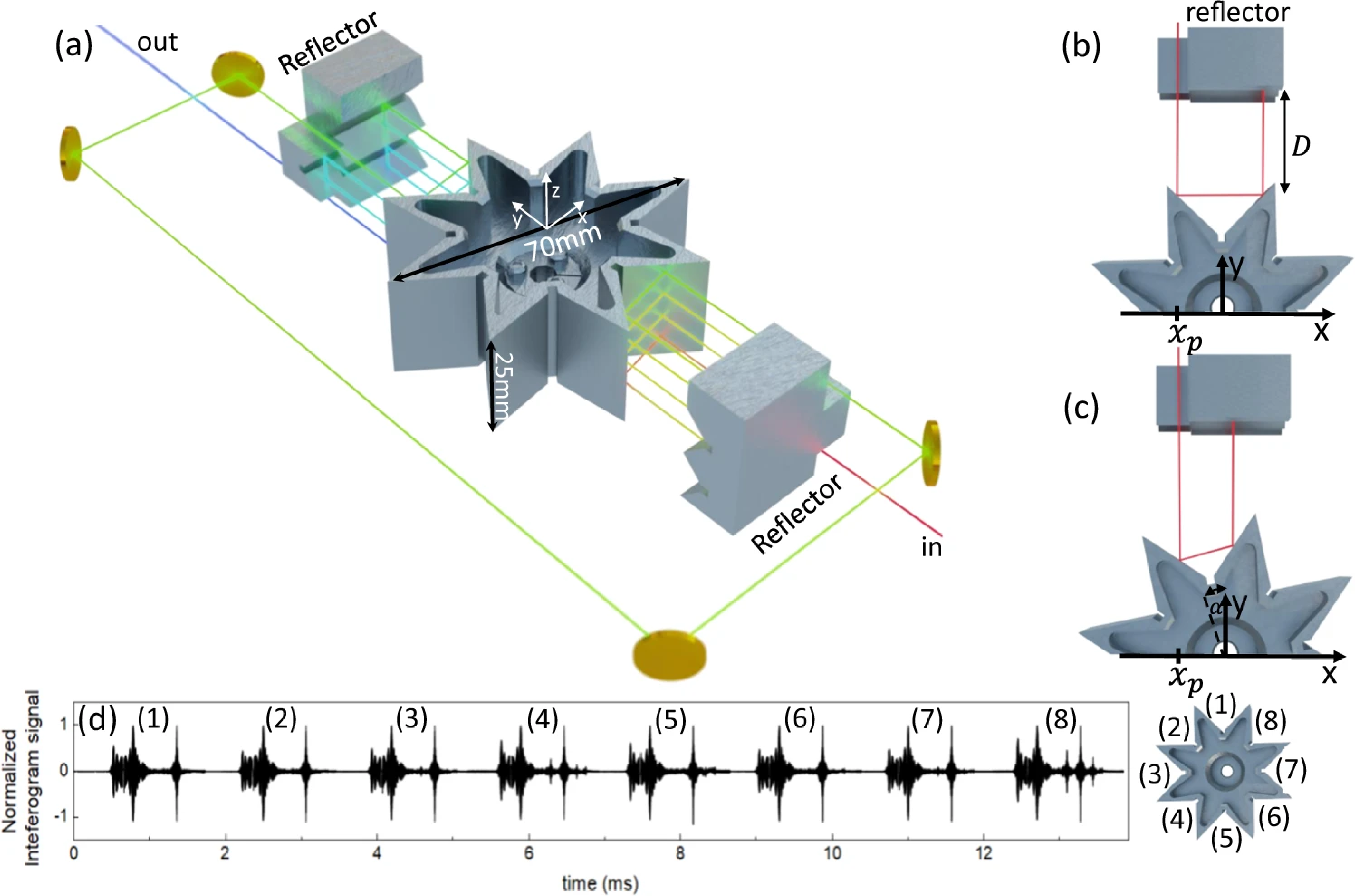
Combining FT spectroscopy with dual-comb spectroscopy for fast acquisition and high-spectral resolution requires high precision and stable control of the quantum cascade laser. Wavelength Electronics’ QCL1000 OEM driver enabled precise current control with minimal electronic noise. The driver also allows analog wavelength modulation of up to 2-3 MHz. This enabled laser tuning by changing the drive current to the QCL with a triangular current modulation ramp. As laser linewidth is a major concern for QCLs, the QCL1000 OEM minimizes noise to as low as 0.7 μA up to 100kHz as well as keeping the average current noise density to as low as 2 nA / √Hz.
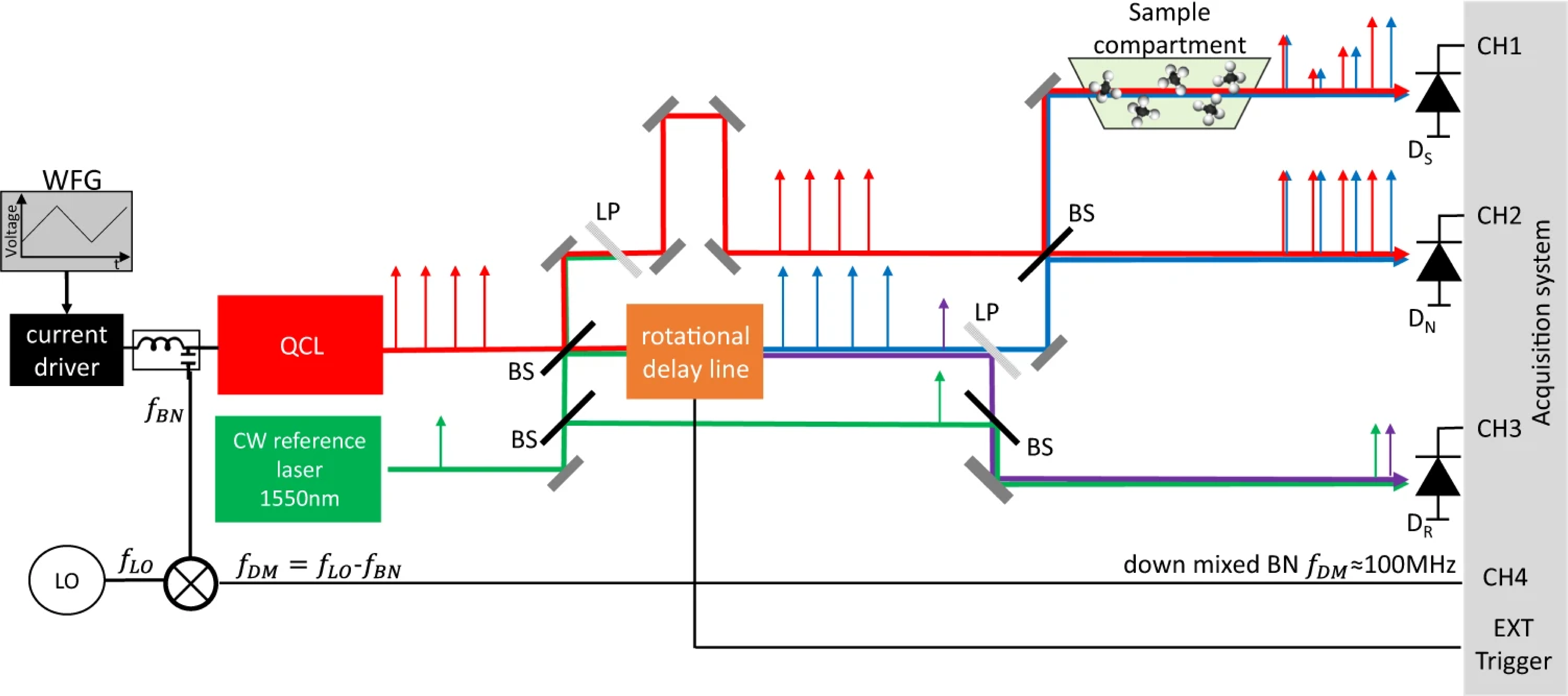
Our QCL driver enables sub-second spectroscopy with high spectral resolution with low noise and stable laser output. This makes the developed rotational FT spectrometer system a reliable tool for dual-comb spectroscopy for applications in reaction and leakage monitoring and in-line process analytical technology.
The complete case study is available as CS-LD09.

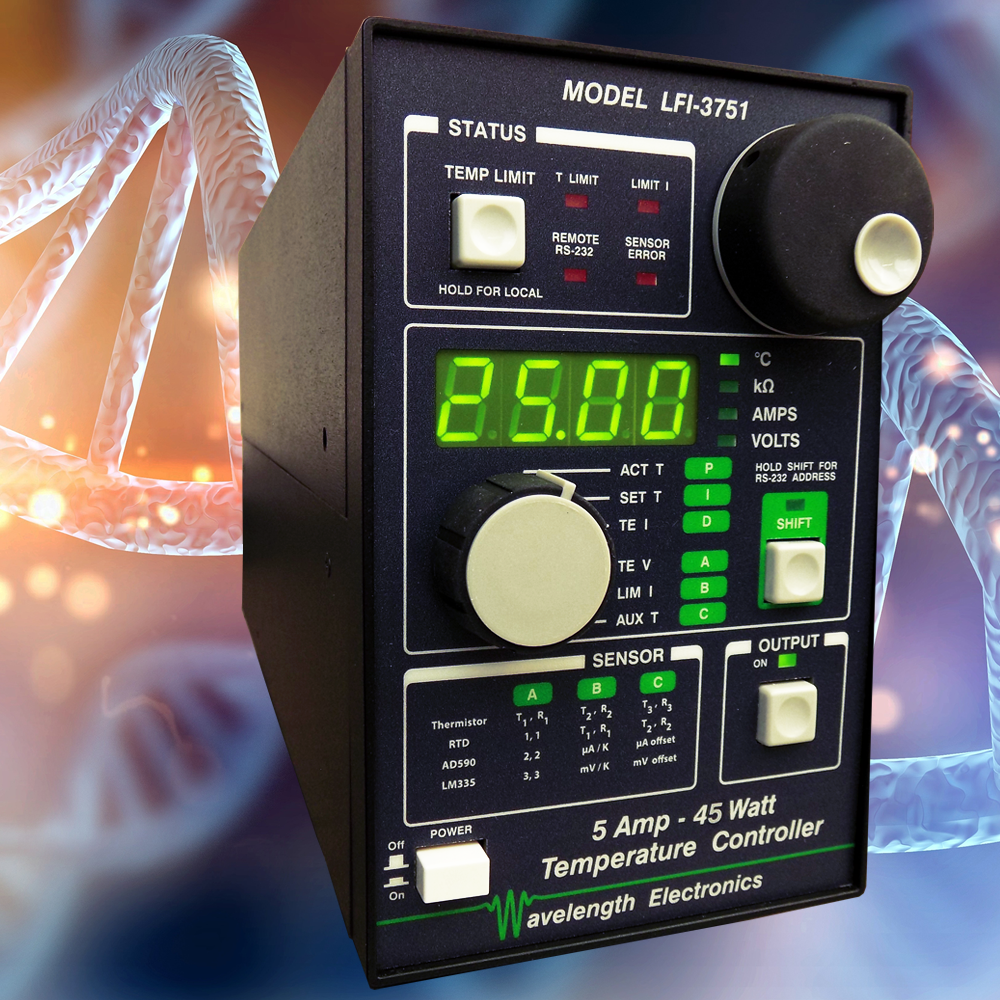
The LFI3751 high-performance Autotune PID temperature control instrument has been used for cell monitoring, PCR, cancer therapy, quantum systems, and medical/biochemical/materials research equipment. Now, this powerful controller has been CE certified, enabling access to markets that accept and require CE-marked devices.
Use the LFI3751 to drive up to ±5A to either thermoelectrics or resistive heaters with up to 9.5V compliance. This instrument operates from AC (100-240V, 50 or 60Hz). Expect stability as good as 0.001°C with thermistors. Even across ambient, this PID controller maintains precision temperature.
From the front panel, adjust temperature limits, current limits, setpoint, PID control values, sensor calibration data, and enable or disable output current. The Analog model has an external analog setpoint input via BNC on the rear panel. The 4-digit display shows actual or setpoint temperature or resistance, output current and voltage.

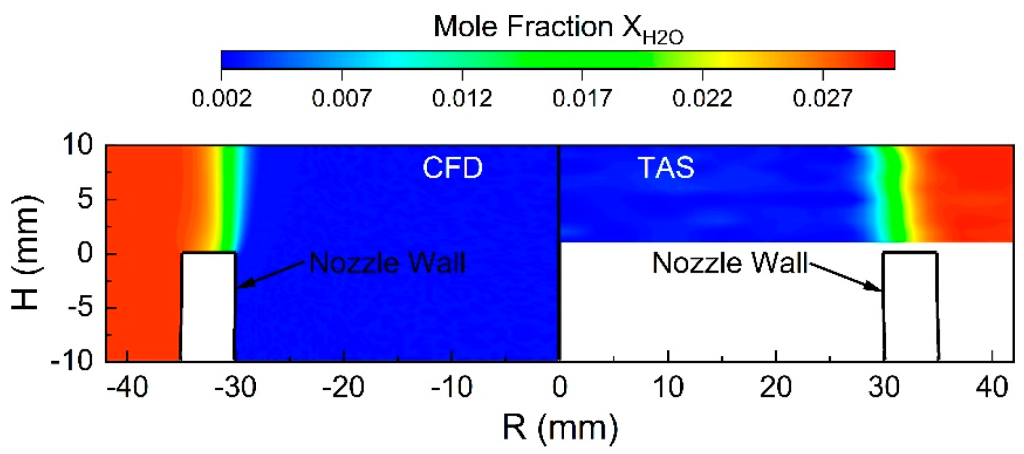
A new tomographic absorption spectroscopy (TAS) platform using two-dimension (2D) contour imaging to display H2O mole fraction distribution from the laminar jet into ambient air.
With the concern over the changing climate and the rise of pollutants in the air, precise and effective monitoring is needed for efficient reduction of greenhouse and hazardous gases in industrial production, transportation, and propulsion.
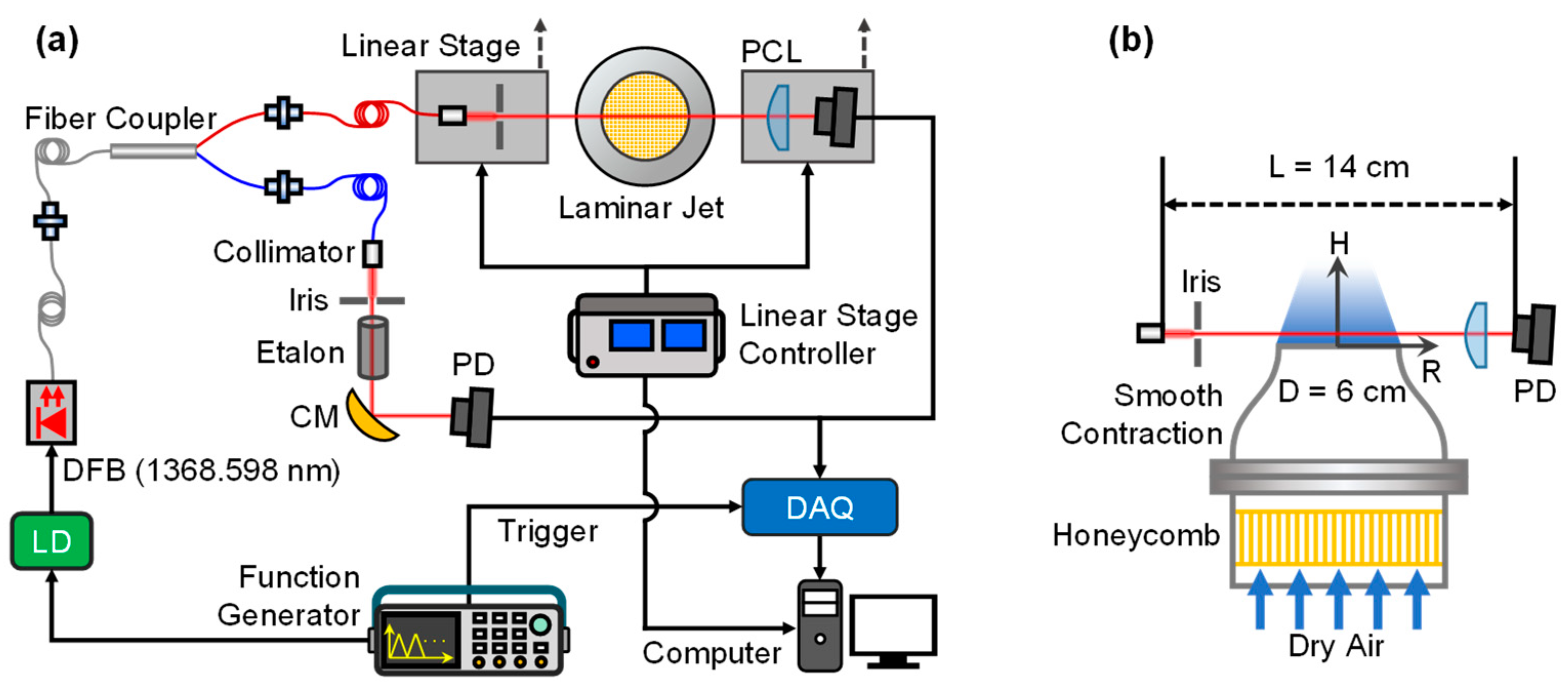
Researchers from the School of Aeronautics and Astronautics in Chengdu, China and the Chinese University of Hong Kong have developed a jet flow, TAS platform to study H2O transport in a non-reactive jet flow with various conditions. By combining tomography and absorption spectroscopy techniques with a laser with center wavelength of 1368.598 nm, two-dimension contour imaging was created to display H2O mole fraction distribution from the laminar jet into ambient air. The reconstructed distributions at different heights above the jet flow nozzle, as well as the 2D contour, matched well with and were validated with computational fluid dynamics (CFD) simulations.

Free-space communications can overcome the logistical difficulties of broadband connections in remote or rural areas. By using long wave infrared (LWIR) quantum cascade lasers (QCLs) as optical sources, high data rates can be transmitted error-free, eliminating the need for physical connections.
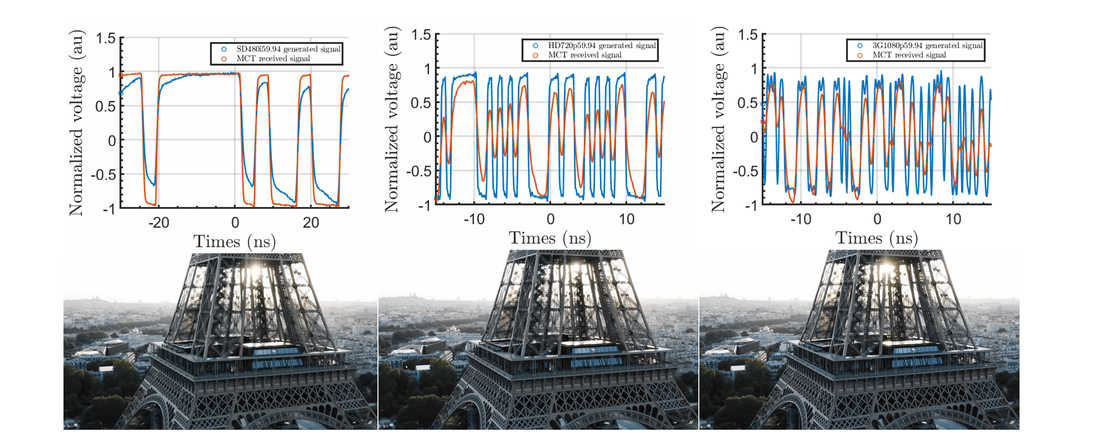
By experimenting with live video broadcasting at different levels of video formats, researchers realized free-space live video broadcasting with a room temperature QCL at a wavelength of 8.1 μm. The high definition video format (1280 pixels x 720 pixels) is transmitted at a data rate of 1.485 Gbits/s without any errors.
High definition video broadcasting requires high precision and stable control of the quantum cascade laser in signal transmission.

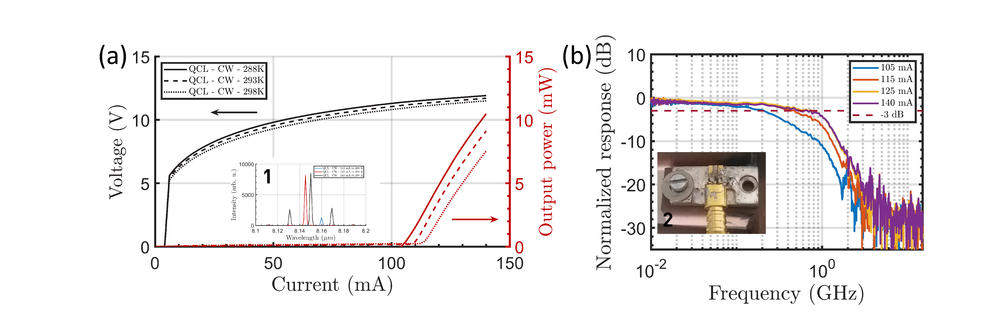
Wavelength Electronics’ QCL driver, QCL2000 LAB, enabled precise current control with minimal electronic noise from the QCL. The driver also provides analog modulation of up to 2-3 MHz for wavelength modulation, allowing the QCL to emit a constant, uninterrupted signal that is subsequently modulated for communication purposes. The transmission was studied for several hours at a time, indicating the long term stability of the QCL2000 LAB current driver. In addition, the stability of the QCL bias current is critical for consistent electrical bandwidth.
The low noise, high stability QCL2000 LAB, can precisely deliver up to 2 A to the laser. This benchtop instrument exhibits noise performance of 1.3 μA RMS up to 100 kHz with an average current noise density of 4 nA/√Hz. Wavelength Electronics’ QCL driver enables high definition video broadcasting with a data rate of 1.485 Gbits/s with low noise and stable laser output. This makes the developed QCL system a reliable tool for real field applications in free-space communication.
The complete case study is available as CS-LD07.

The effects of exceptional point (EP) singularities can naturally be seen in many applications in physical problems: mechanics, electromagnetism, atomic and molecular physics, quantum phase transitions, quantum chaos, and much more. Researchers from Switzerland have developed a more practical and robust method for studying these effects. As lasers provide an ideal system for direct observation and engineering of spectral singularities, two dual section distributed feedback (DFB) quantum cascade lasers (QCLs) were designed with Fabry-Perot modes and quarter wave shifted (QWS) DFB modes.
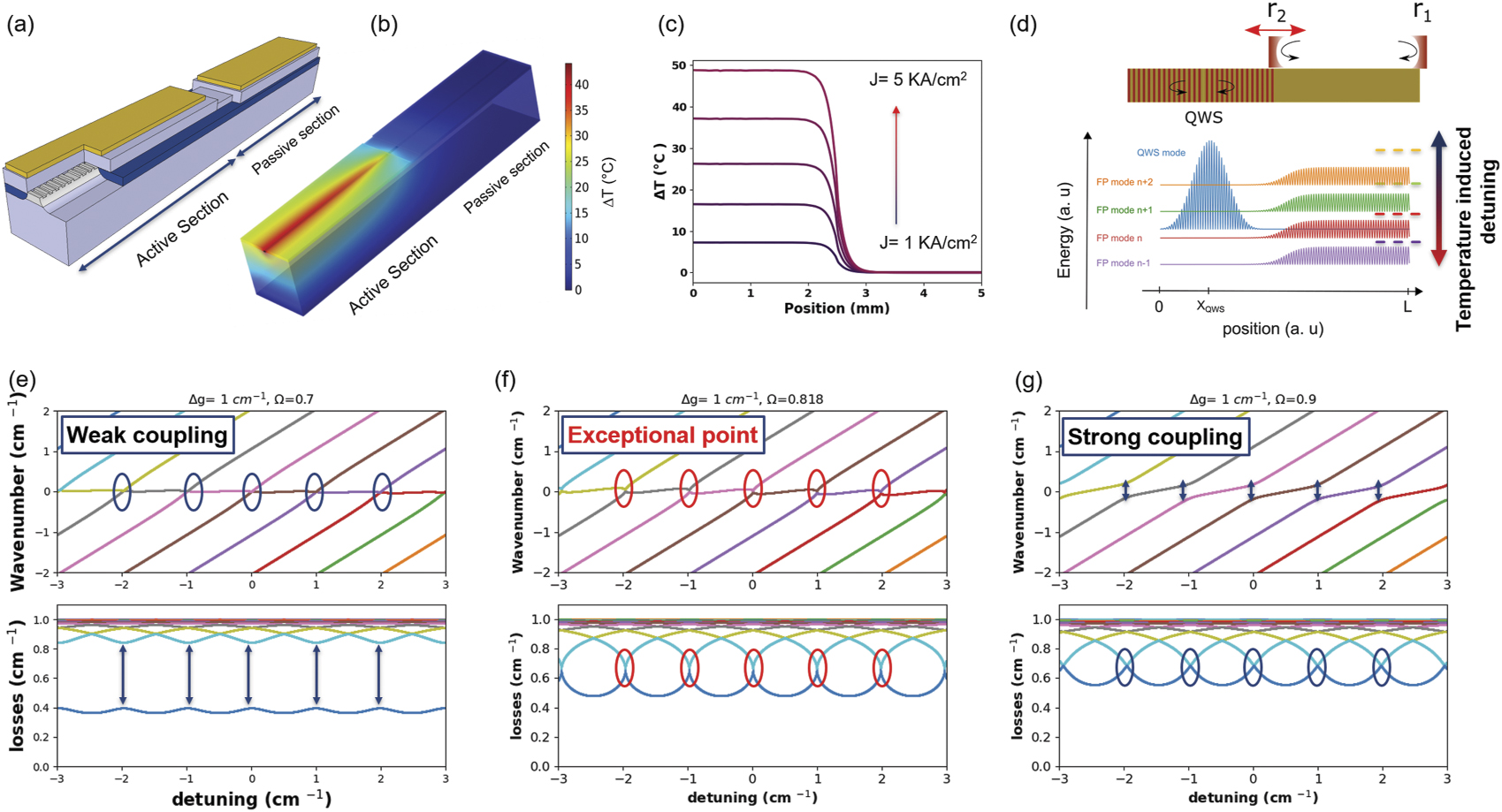
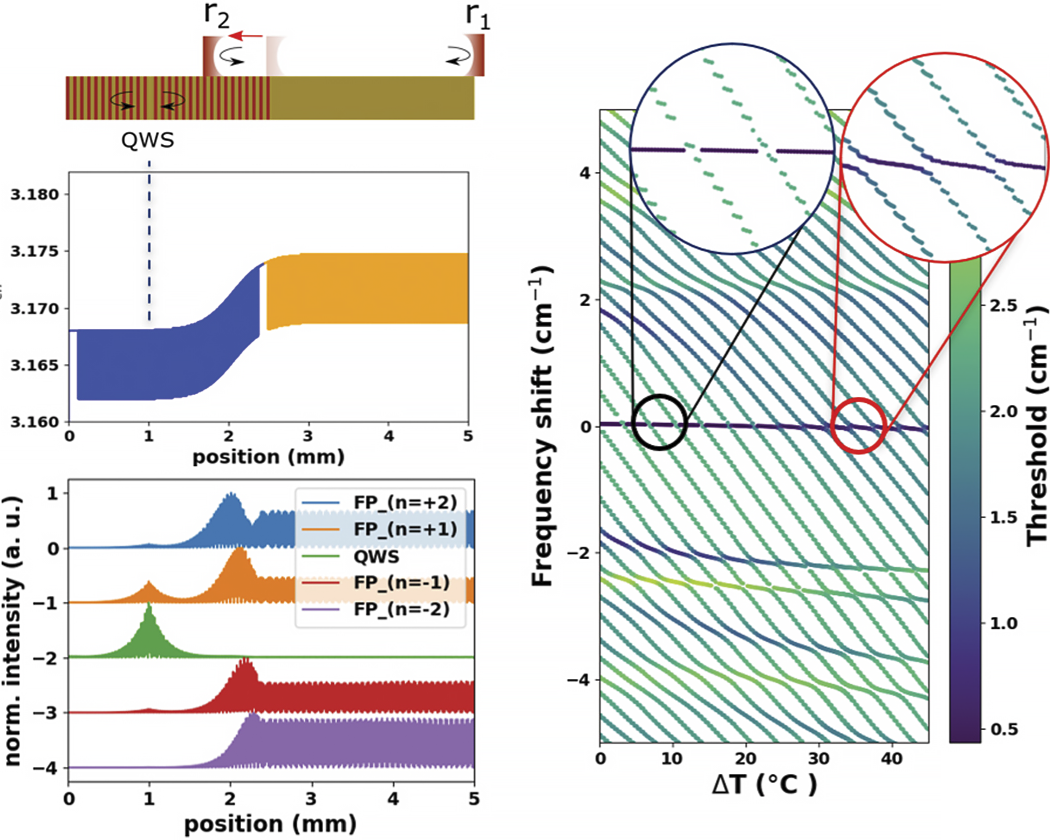
Because the EP degeneracy is lifted at only a certain applied current, ultra-low noise laser drivers were needed. Wavelength Electronics’ driver limits noise produced to as low as 1.3 μA RMS up to 100 kHz and an average current noise density of 4 nA/√Hz. With an output of up to 2 A and stability around 10 ppm long-term, the QCL2000 provided the stability and flexibility needed. This stability allowed researchers to discover the precise applied current at which the EP degeneracy was lifted.
The complete case study is available as CS-LD06.

Capillary-based backscattering interferometry has been used as a highly sensitive refractive index sensing tool to measure molecular binding. Generally, ray tracing is used to simulate the backscattered light from the specific capillary. Previous ray tracing models do not account for polarization effects, capillary dimensions, material choices, and other parameters that could change the interference patterns captured. Researchers from the United Kingdom have developed a comprehensive ray tracing model including many parameters not previously reported.
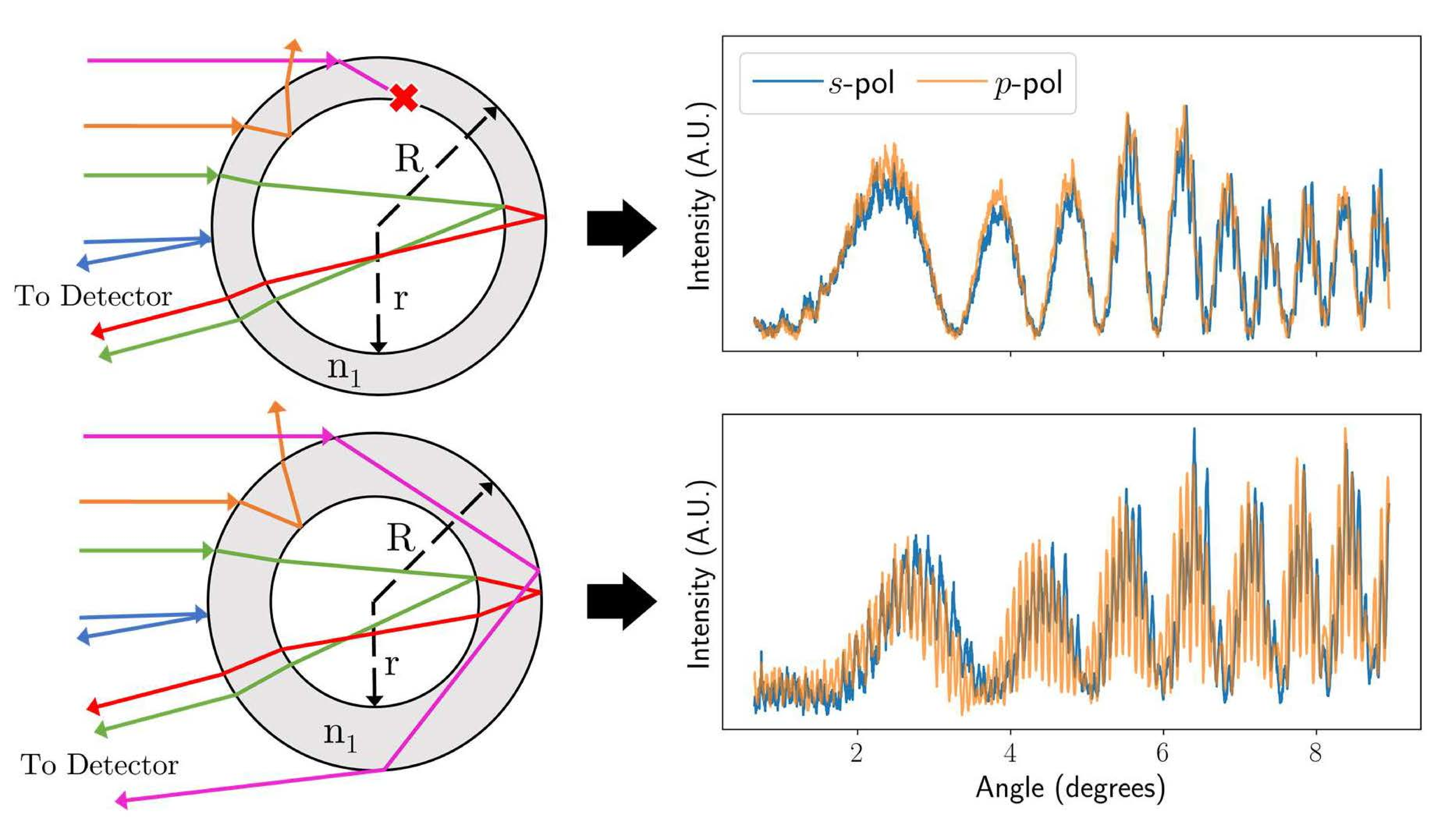
The significance of the inner diameter, outer diameter, and the refractive index of the capillary material are shown to heavily influence the interference pattern. Potential designs are explored to measure sensitive temperature changes, and therefore refractive index changes, based on capillary characteristics.
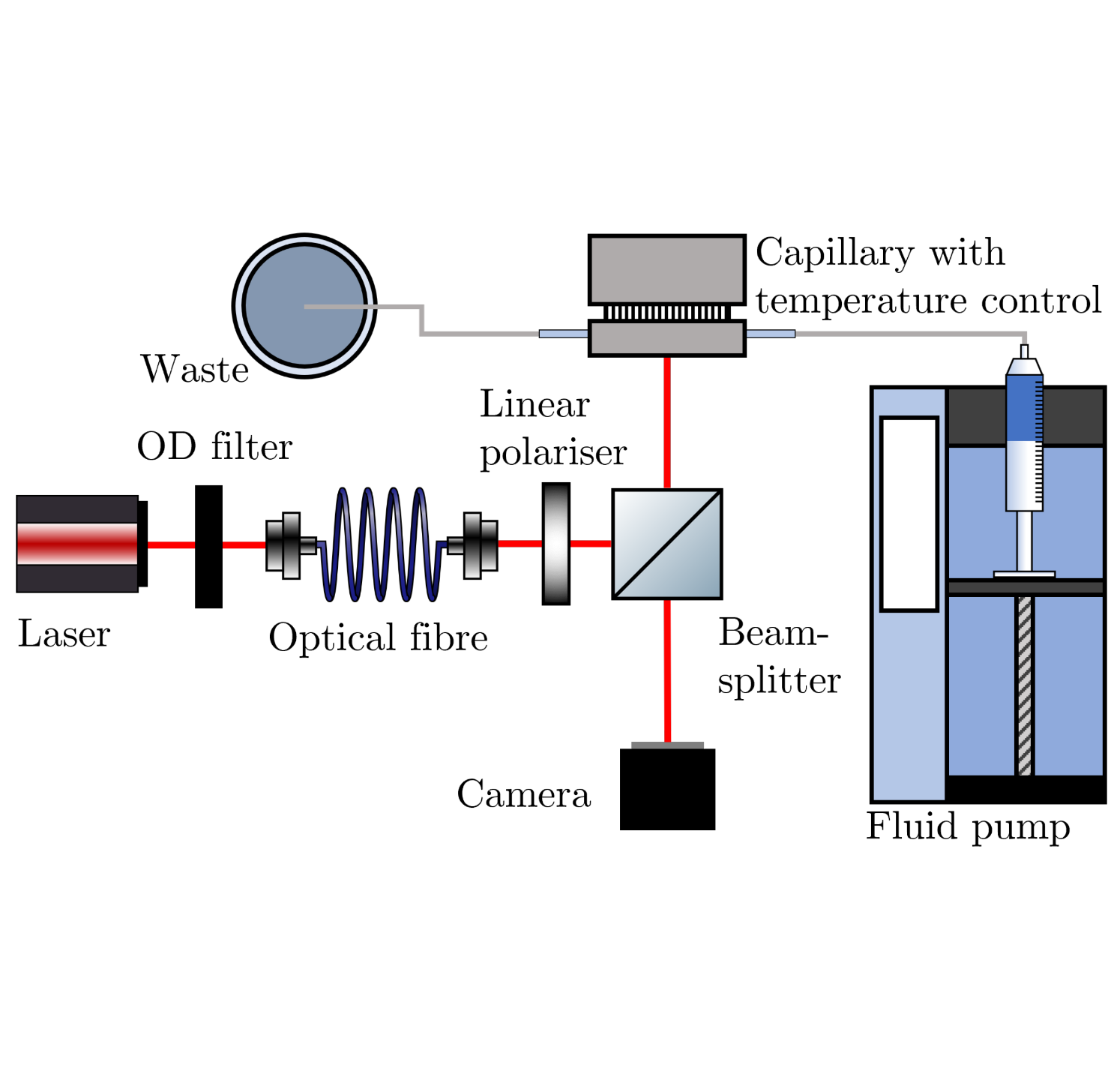
Due to temperature dependence of the refractive index of the solution inside the capillary and the capillary itself, the aluminum stage that holds the capillary needs to be maintained at a stable temperature. Wavelength Electronics’ WTC3243HB temperature controller can achieve 0.0009ºC temperature stability when coupled with a Peltier thermoelectric module. This controller, an adaption of the standard WTC3243 controller, operates from 3.6 V, Lithium-Ion batteries. The WTC3243HB ensured stable refractive index of the solution inside the capillary, correlating to a more stable and repeatable backscattering light collection from the camera. By using the WTC3243HB temperature controller, researchers were able to maintain consistent and stable temperatures of the capillary and the solution inside the capillary in this backscattering interferometer, beneficial for measuring molecular binding via interferometric refractive index sensing.
The complete case study is available as CS-TC07.