
CATEGORIES




Advancing THz and QCL Research with Precision Laser Control
Are you working with quantum cascade lasers (QCLs) or terahertz (THz) technology? Reliable experimental results depend on more than optical design alone. Stable, low-noise laser current and temperature control are essential for isolating system performance, improving measurement accuracy, and accelerating innovation.
Recent advances in THz and QCL research require highly stable laser control to achieve repeatable results. Wavelength Electronics controllers provide researchers with the precision needed to minimize experimental variables, allowing them to focus on evaluating new materials, optical designs, and laser architectures rather than compensating for fluctuations in laser operation.
Two recent research efforts demonstrate how precise QCL control enables breakthroughs in THz technology.
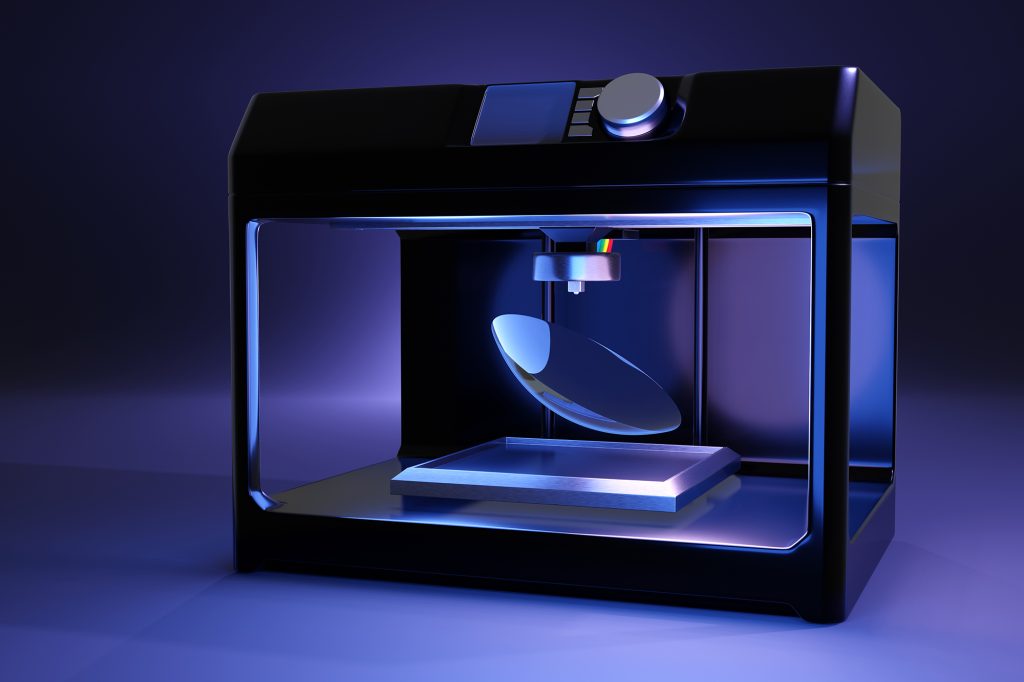
3D Printing High-Performance THz Optics with Cyclic Olefin Resin
Researchers developed a new cyclic olefin resin (COR) that can be fabricated using stereolithography (SLA) 3D printing to create affordable, high-performance terahertz lenses and optical components.
Traditional SLA materials often absorb too much THz radiation, limiting their usefulness in advanced optical applications. The newly developed COR material demonstrated significantly improved THz transparency while maintaining the design flexibility of 3D printing, enabling the creation of complex optical components that would otherwise be difficult or expensive to manufacture.
To evaluate the performance of the printed lenses, the researchers built a 3.4 THz QCL test system driven by a Wavelength Electronics QCL1000 LAB current source. The controller provided a precisely regulated 700 mA square-wave drive at 167 Hz, ensuring that measured changes in beam intensity and focusing performance were caused by the printed optics—not variations in laser drive current.
The study demonstrated that:
- COR exhibited exceptionally low THz absorption compared with conventional SLA materials.
- 3D-printed plano-convex and Fresnel lenses efficiently focused THz radiation.
- Custom THz optical components can be manufactured more affordably using advanced 3D printing techniques.
By providing a stable QCL drive source, Wavelength Electronics enabled researchers to accurately characterize the performance of innovative 3D-printed THz optics.
Optimizing Quantum Cascade Laser-Pumped Molecular Lasers
In another study, researchers investigated how resonator geometry affects the efficiency and stability of quantum cascade laser-pumped molecular lasers (QPMLs). The goal was to increase THz output power while reducing optical feedback that can destabilize the pump laser.
Achieving accurate results required an exceptionally stable infrared pump laser. Researchers used a Wavelength Electronics QCL1500 current controller and TC5 temperature controller to maintain precise laser drive current and package temperature while the QCL was frequency stabilized to a molecular absorption line.
This level of stability was critical. Even small variations in laser current or temperature can shift the laser wavelength, reducing pumping efficiency and making it difficult to accurately compare different resonator designs.
With a stable laser platform, the researchers identified resonator geometries that improved efficiency and reduced destabilizing optical feedback. Their optimized design achieved 2 mW continuous-wave output from an ammonia molecular laser, reported at the time as the highest continuous-wave power demonstrated for a QCL-pumped molecular laser.
Wavelength Electronics current and temperature controllers provided the precise wavelength and power stability required to optimize resonator designs and achieve record THz laser performance.
Precision Control Enables Next-Generation Photonics Research
From 3D-printed THz optics to high-power molecular lasers, these studies highlight the importance of removing uncertainty from complex optical experiments. Stable, low-noise QCL current and temperature control gives researchers the confidence that their measurements reflect true system performance—helping advance the next generation of photonics technologies.
