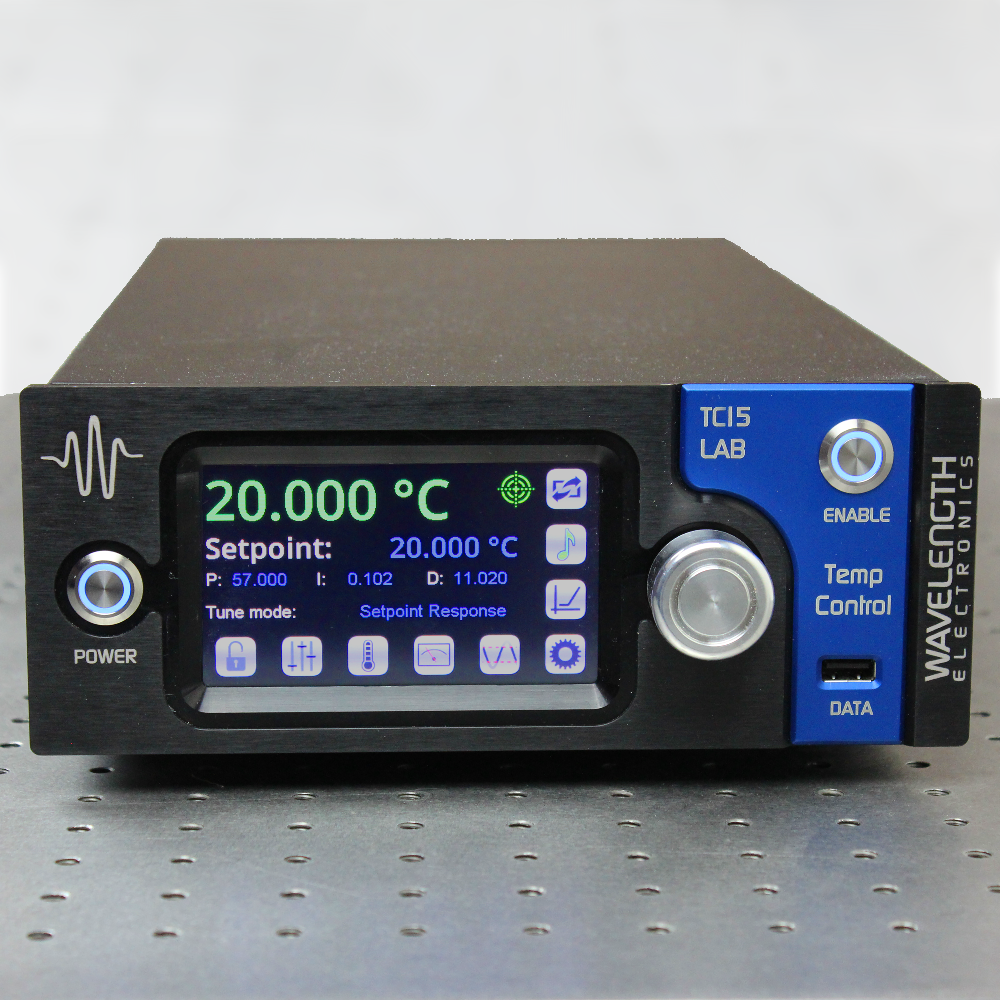
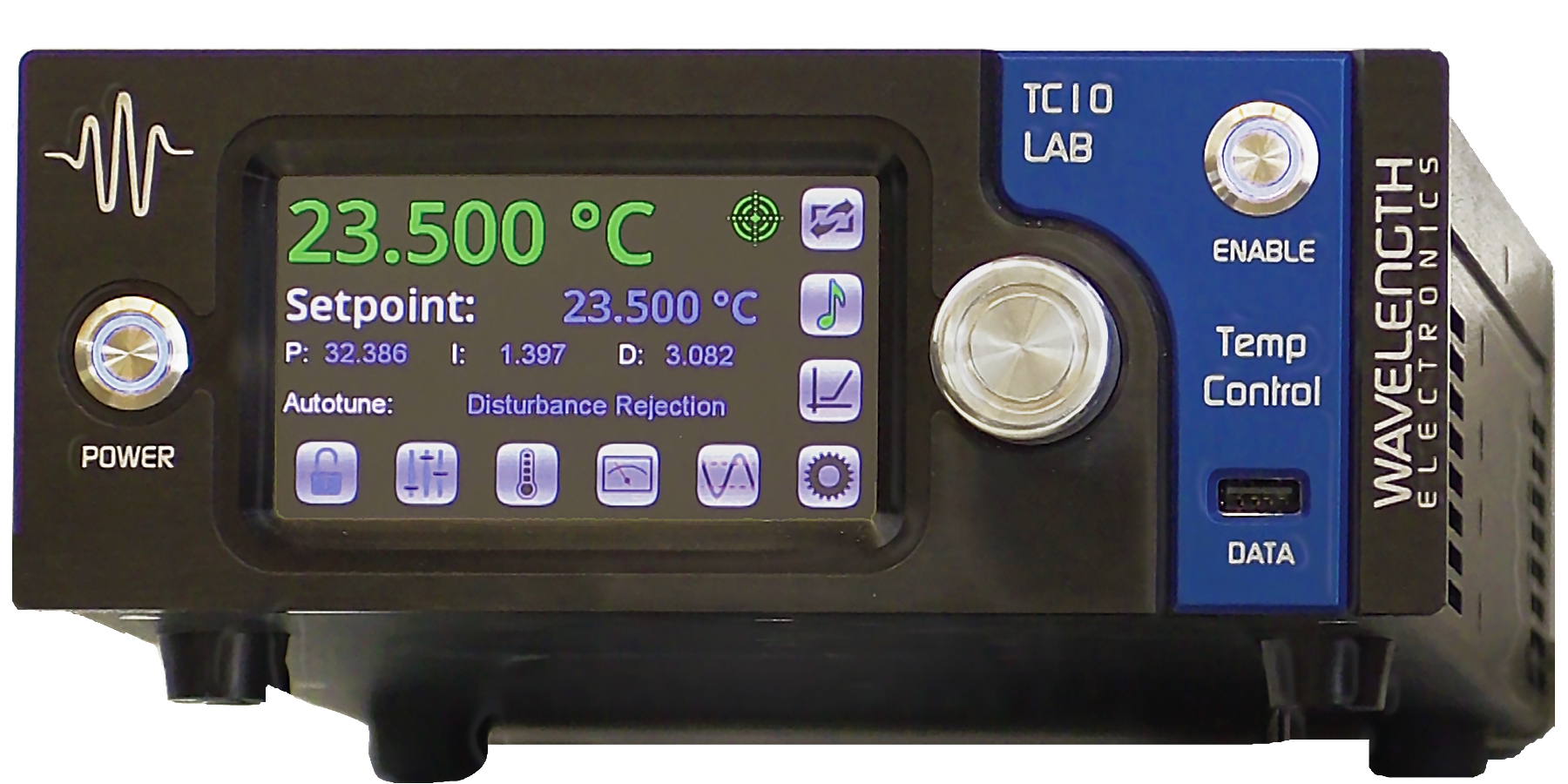
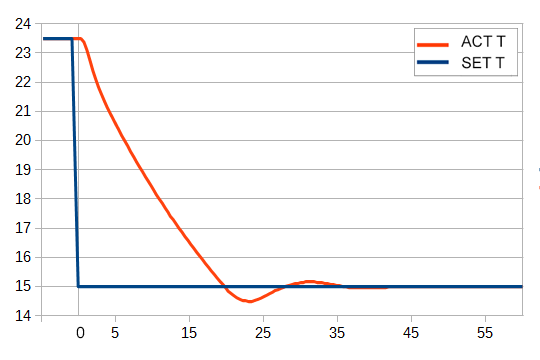
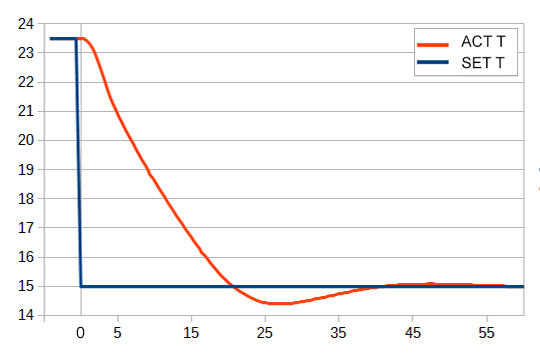
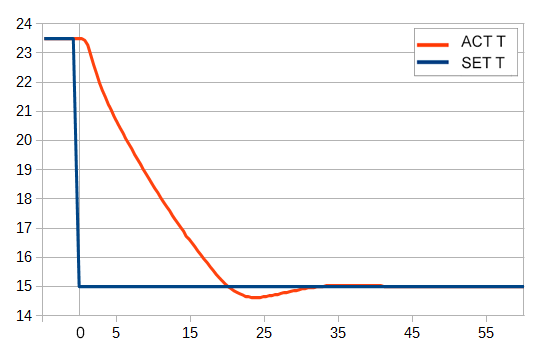
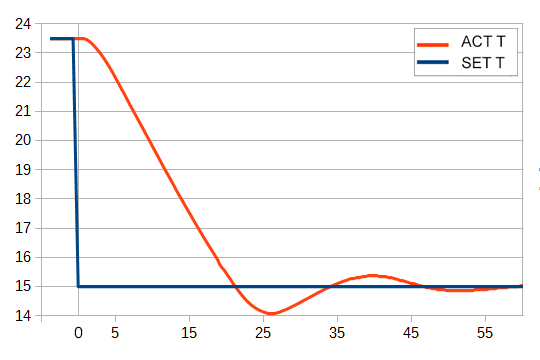
Instead of long, manual calculations to derive the optimal Proportional, Integral, and Derivative [PID] control terms for a load, press the IntelliTune icon and the instrument will automatically cycle through a characterization test to tune the control terms for best performance. Two methods of IntelliTune are available. Setpoint Response optimization will minimize the time to temperature for the load. Disturbance Rejection optimization is best when there will be significant changes to the ambient temperature or operating condition. This could be for a pulsing laser diode where the active heat load changes or a sample that is to be tested in changing ambient temperatures. For detailed exploration of IntelliTune, download Application Note AN-TC13: IntelliTune vs. Conventional Autotune.
Take your research to the next level.
For more information, download the datasheet.
A QuickStart video simulates controlling temperature for a spectroscopy application using a laser with an embedded 3A thermoelectric and a 10kΩ thermistor. It takes you through all the steps necessary to control the laser temperature quickly and easily.