Montana Photonics Industry Alliance hosted Senator Daines (R-MT)

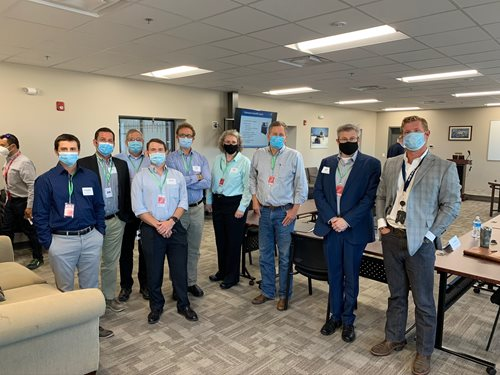
Senator Steve Daines (R-Mont.) recently met with the Montana Photonics Industry Alliance to discuss the positive economic impact of the optics and photonics industry in the state.

Senator Daines co-chairs the Congressional Optics & Photonics Caucus with Senator Kyrsten Sinema (D-AZ), and Representatives Joe Morelle (D-NY) and Brian Mast (R-FL). The bipartisan, bicameral Caucus is set to launch at a virtual event on Wednesday 9 September 2020 at 2:30 pm EDT, and the National Photonics Initiative invites you to be part of the event.

The O&P Caucus will work to educate members of Congress and their staff about the importance of light-based research and technologies to the US economy, security, and scientific excellence. Advocating for federal investment, the Caucus will serve as a positive, proactive voice for the optics and photonics community within Congress and as a bridge to the Administration.

The launch event will feature remarks from the four co-chairs and Administration officials as well as a short Q&A session. To attend, you must register.

As co-leaders of the National Photonics Initiative, SPIE – the international society for optics and photonics and OSA have worked closely with Congress over the past year to establish this Caucus. We are very excited about this new voice for the optics and photonics community and look forward to your participation and support.

VIDEO: LDTC LAB Series Instrument Quick Start

Senator Steve Daines (R-Mont.) recently met with the Montana Photonics Industry Alliance to discuss the positive economic impact of the optics and photonics industry in the state.

Senator Daines co-chairs the Congressional Optics & Photonics Caucus with Senator Kyrsten Sinema (D-AZ), and Representatives Joe Morelle (D-NY) and Brian Mast (R-FL). The bipartisan, bicameral Caucus is set to launch at a virtual event on Wednesday 9 September 2020 at 2:30 pm EDT, and the National Photonics Initiative invites you to be part of the event.

The O&P Caucus will work to educate members of Congress and their staff about the importance of light-based research and technologies to the US economy, security, and scientific excellence. Advocating for federal investment, the Caucus will serve as a positive, proactive voice for the optics and photonics community within Congress and as a bridge to the Administration.

The launch event will feature remarks from the four co-chairs and Administration officials as well as a short Q&A session. To attend, you must register.

As co-leaders of the National Photonics Initiative, SPIE – the international society for optics and photonics and OSA have worked closely with Congress over the past year to establish this Caucus. We are very excited about this new voice for the optics and photonics community and look forward to your participation and support.

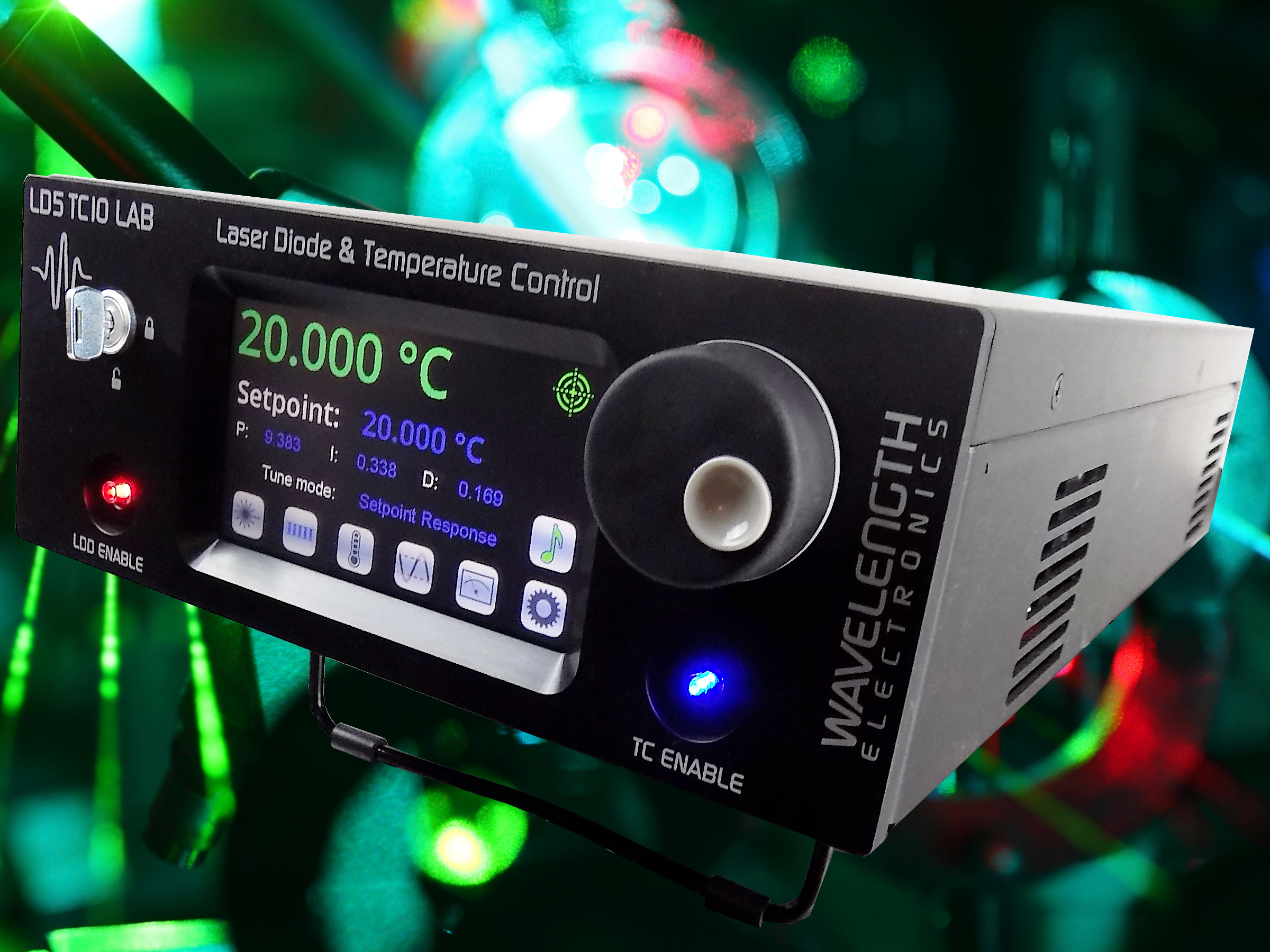
LDTC LAB Series Instruments Improve Laser Diode System Performance

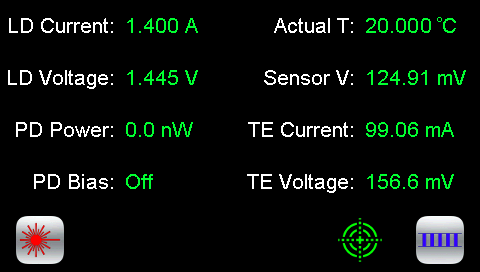
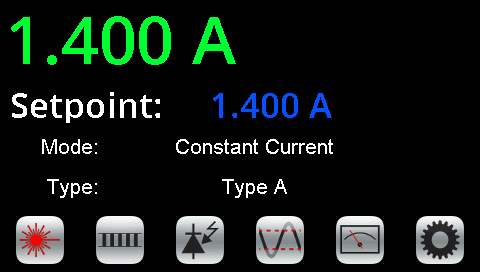
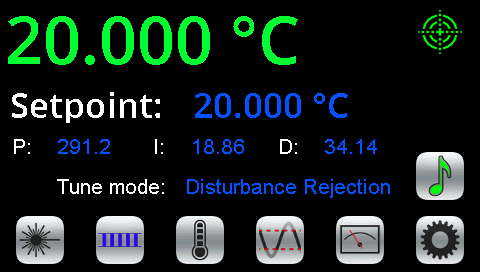
The LDTC LAB series instruments combine best-in-class low noise, high-end digital control laser diode driver technology with an IntelliTune® smart temperature controller. If you need stable wavelength, stable temperature, stable laser diode current or power, or low noise, these offer the best performance and value.

Two models are available, the LD2TC5 LAB and the LD5TC10 LAB. The LD2TC5 LAB outputs up to 2 and 5 A for the laser and thermoelectric, respectively. The LD5TC10 LAB outputs up to 5 and 10 A. Both models offer 10 V of laser compliance voltage and 15 V of thermoelectric compliance voltage.

The intuitive touchscreen interface and IntelliTune® PID control algorithm simplify precision operation.

FEATURES INCLUDE:

  • Low Noise for Narrow Linewidth
  • High Temperature Stability for Stable Wavelength
  • High Laser Current Stability for Repeatable Scans
  • Temperature stability better than 0.0009°C
  • Laser cumulative current noise of 7 μA RMS
  • Noise current density 30 nA/√Hz
  • CC mode bandwidth of 450 kHz
  • The touch-screen interface makes operation intuitive and simple.
  • Load failure protection
  • Over- and under-temperature limits on the load
  • Current/voltage limits for both TEC and laser
  • Automatic laser shutdown upon TEC error available
  • Supports A, B and C type lasers
  • Compatible with most temperature sensors

VIDEO: LDxCHA Series Laser Diode Driver Quick Start

This video will help you quickly set up the LDxCHA Series of laser diode drivers for your application. The LDxCHA delivers low noise and reliable stability in applications such as materials processing, industrial laser cutting, and laser diode bars/stacks.

VIDEO: WTC3243 Temperature Controller Quick Start

Use the WTC3293 Evaluation Board to rapidly prototype a precision temperature control system using the WTC3243. The WTC is a compact, analog Proportional/Integral control loop that easily handles variable operating conditions with a stability of better than 0.0009ºC. It has been designed into electro-optical systems, airborne instrumentation, spectroscopic monitors, and medical diagnostic equipment.

VIDEO: What is a Thermistor?

This Basics Series video gives an introduction to thermistors, what they are, how to use them and how to calculate optimum range.

VIDEO: What is Bandwidth?

This Basics Series video gives an introduction to bandwidth, how it is defined and how to determine the 3dB bandwidth of a system.

VIDEO: LDTCxx20 Series Integrated Laser Diode Controller Quick Start

LDTC modules are in use around the world providing trouble-free reliability in range finders, telecom laser modules, military-aerospace research and development, airborne metrology, academic research, laser diode LIV testers, and more. This video illustrates how to quickly and easily set up and operate these integrated laser diode driver and temperature controller products.

Configure Power Supply (0:56)
Configure Temperature Control (1:48)
Configure Laser System (3:58)
External Laser Setpoint (5:50)

VIDEO: What is a Laser Diode Driver?

In the most ideal form, a laser diode driver is a constant current source, linear, noiseless, and accurate, that delivers exactly the current to the laser diode needed for a particular application. The user chooses whether to keep laser diode or photodiode current constant and at what level. Then the control system drives current safely to the laser diode.