Optoelectronic qualification requires more than a laser source—it requires precise, repeatable control of that source.
Noise, drift, and instability in the laser drive electronics can affect optical output and complicate the characterization of the device or system under test.
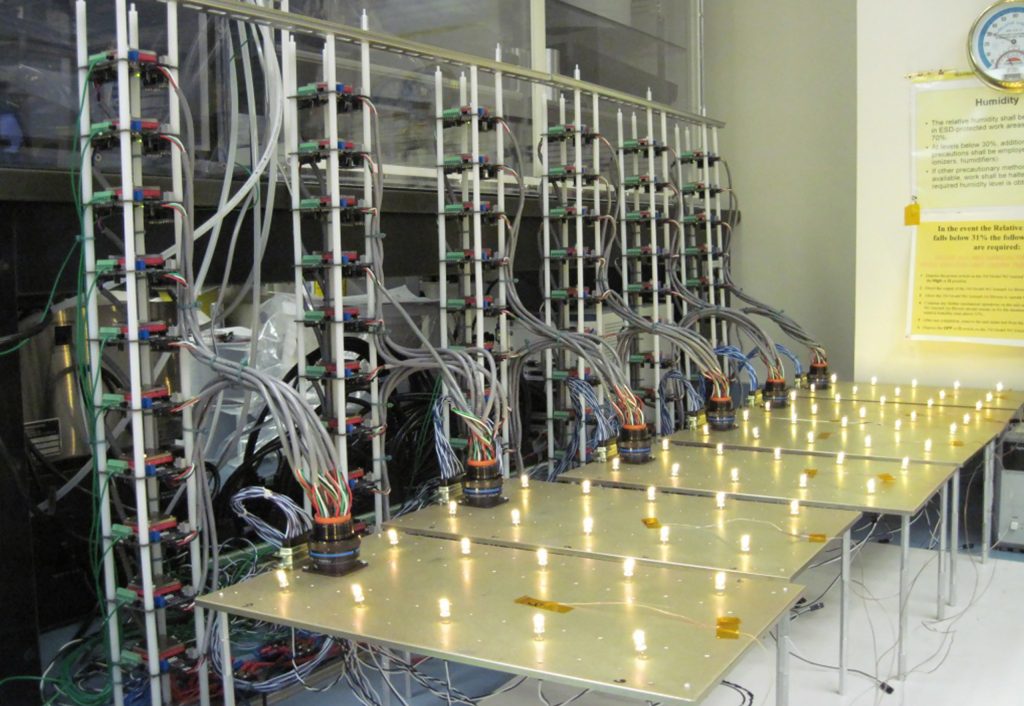
NASA’s Goddard Space Flight Center photonics group uses Wavelength Electronics’ WLD3343 laser diode drivers and WLD3393 evaluation boards in its optoelectronic qualification setups. These products provide a compact platform for implementing precision laser diode current control during the development and evaluation of photonic technologies.
The WLD3343 is a low-noise laser diode driver designed to provide stable current to laser diodes while protecting the device from electrical transients and operating faults. Stable drive current is particularly important because variations in laser current can produce corresponding changes in optical output power and, depending on the laser, wavelength and other operating characteristics.
Paired with the WLD3393 evaluation board, the driver can be incorporated into a laboratory setup for evaluating laser and optoelectronic system performance. The evaluation board simplifies access to the driver’s control and monitoring functions, allowing researchers to integrate the electronics into experimental and qualification configurations.
In demanding photonics applications, the performance of the control electronics can directly influence the quality and repeatability of experimental results. Low-noise, stable laser diode current control helps ensure that researchers are measuring the performance of the optoelectronic technology—not unintended variations introduced by the laser driver.