VIDEO — QCL LAB Series Quick Start

April 13, 2015
QCL LAB Series Quick Start Video is now available…

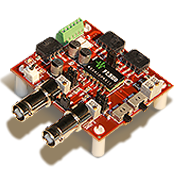
More detailed information is available in Mobile mapping and Eddy Covariance flux measurements of ammonia (NH3) emissions with a portable Quantum Cascade Laser-based open-path sensor.

[vc_row][vc_column][vc_column_text]
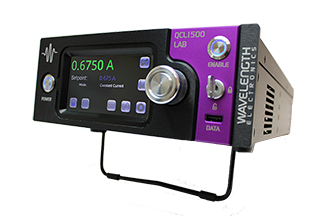
Low Noise QCL Driver Laboratory Series Instrument
[/vc_column_text][vc_empty_space][vc_column_text]
Product Demonstration: Low Noise QCL Driver Instrument Operation and Applications
Wavelength CEO Mary Johnson will present a product demonstration of the new low noise QCL driver instrument on Tuesday, 10 February 2015 at 10:30 AM in Demo Area 1 (Hall ABC South). Learn about our new low noise QCL driver instrument, including operation, features, and best-fit applications. The only driver licensed to use patented high precision QCL current control technology.
Meet the Applications Engineers
JOE McDONALD
Joe McDonald is a graduate of Idaho State University with a degree in Laser Electronics/Optics. For 18 years he has worked with electro-optics for a variety of applications, and been involved with all aspects of production — manufacturing, sales, customer service, training and technical documentation. If you have product or technical questions, he’s confident that he can provide the support you need!
DIRK RESTVEDT
Dirk Restvedt is an honor graduate of DeVry University, Phoenix Arizona, with a degree in electronics and computer science. He brings 20+ years’ experience in semiconductor laser related industries to Wavelength Customer Support. He has been a factory trainer and field service technician for clients such as: Intel, 3M, Hewlett Packard, IBM, Fujitsu, Northrup, Lockheed Martin, NASA. With 18 years’ experience in technical support administration, customer service and customer training curriculum development, you know he will have a clear, thoughtful answer to any support questions you might have.[/vc_column_text][/vc_column][/vc_row]

[vc_row][vc_column][vc_column_text]
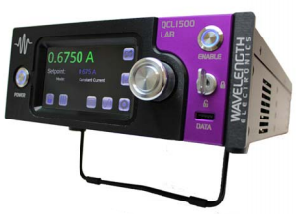
The QCL Driver Laboratory Series Instrument is now available.
Electronic noise from Quantum Cascade Laser drivers has long limited the detection threshold of chemical sensors. No longer. Patented* low noise technology is now available to both researchers and developers. Wavelength Electronics introduces the QCL LAB family of instruments that couple an intuitive touchscreen display with low noise drive electronics that have a proven track record of dropping detection thresholds up to an order of magnitude.
Quantum Cascade Lasers (QCLs) operate with high power at wavelengths suited to detecting molecules significant to humans. Some applications include remote detection of explosive materials, medical diagnosis using the breath, non-invasive glucose testing, emissions & air quality monitoring, petroleum leak detection, methane detection in fracking… The list is growing exponentially as researchers discover new possibilities.
Detection threshold is always a defining characteristic of a sensor. With 0.4 µA RMS noise current and 1nA / √Hz average current noise density up to 100kHz, the QCL500 LAB instrument allows the lowest possible detection thresholds. Low electronic noise translates into stable center wavelength, narrow linewidth, and repeatable scans.
Models are available with output currents of 500 mA, 1000 mA, 1500 mA, and 2000 mA in Constant Current mode. Compliance voltage is adjustable up to 20 V with 2-3 MHz analog modulation bandwidth. Operate standalone or via USB or Ethernet (remote operation software included). Application notes and free technical support help you minimize noise in particularly demanding applications.
After your testing is complete, compact OEM drivers are available for integration into field-deployable systems. The QCL OEM family noise levels are also the lowest commercially available. Safety features include:
[/vc_column_text][vc_row_inner][vc_column_inner width=”1/2″][vc_single_image image=”2878″ img_size=”full”][/vc_column_inner][vc_column_inner width=”1/2″][vc_single_image image=”2879″ img_size=”full”][/vc_column_inner][/vc_row_inner][vc_row_inner][vc_column_inner width=”1/4″][/vc_column_inner][vc_column_inner width=”1/2″][vc_single_image image=”2880″ img_size=”full”][/vc_column_inner][vc_column_inner width=”1/4″][/vc_column_inner][/vc_row_inner][vc_column_text]
COUNT ON WAVELENGTH ELECTRONICS
Wavelength Electronics leads the laser control industry by simplifying advanced quantum cascade laser, laser diode, and thermal control for demanding electro-optical OEMs and researchers. Our experienced Sales Engineers are available to help you decide which controller is right for your application. To learn more about the QCL Series Low Noise Quantum Cascade Laser Drivers and Wavelength’s complete line of high precision, low-noise, ultra-stable laser diode drivers and temperature controllers visit us at Photonics West, Booth #2406 in the South Hall, or www.teamWavelength.com. Come see our product demo on Tuesday, February 10 at 10:30AM in Demo Area 1, South Hall.
*Covered by U.S. Patents 6,696,887; 6,867,644 and 7,176,755. Licensed from Battelle Memorial Institute[/vc_column_text][/vc_column][/vc_row]

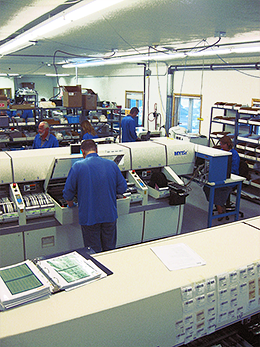

Natural gas extraction from horizontal drilling and hydraulic fracturing (“fracking”) promises an abundant and inexpensive domestic energy source; per unit energy, natural gas combustion produces only half the carbon dioxide emissions of coal. However, methane is 25 times more potent as a greenhouse gas on a per molecule basis than carbon diozide, and fugitive methane emissions from the natural gas supply chain (from extraction to end users) much above 1% of the total production would negate the climate benefits of transitioning from coal to natural gas.One of the key barriers for identifying and mitigating fugitive methane emissions is a lack of compact, portable, and field-robust sensors.
This webcast covers recent developments and field deployments of compact quantum-cascade-laser (QCL)-based methane sensors to quantify methane emissions from the Barnett, Marcellus, and Monterey Shales. Fugitive methane concentrations, plume sizes, and distribution of emissions rates from shale gas extraction, storage, and transmission will be presented, along with a summary of the technical and sampling challenges needed to quantify fugitive methane emissions from the lifecycle of the natural-gas supply chain.
Mark Zondlo, Ph.D.,
Assistant Professor of Civil and Environmental Engineering
at Princeton University, will be presenting.
PREMIERES LIVE
October 30, 2013
TIME:
1:00 PM EDT
12:00 PM CDT
10:00 AM PDT
5:00 PM GMT
What You’ll Learn:
Who Should Attend:

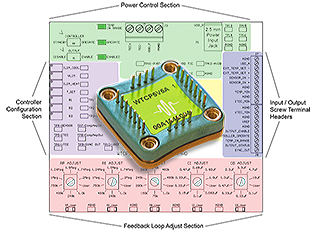
Thoughtfully designed features provide valuable benefits, and help ensure the long-term reliability of your application:

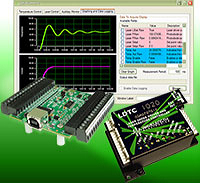
Expand the capabilities of your Wavelength Electronics controllers with the USBKIT and QuickConnect™ software. The upgraded version now supports all the LDTC integrated temperature and laser diode controllers, as well as all the PTC PCB-mount temperature control models. The USBKIT provides convenient computer control of output currents up to 12.5 A at a surprisingly low price. The software provides an intuitive virtual control panel that allows you to leverage the low-noise, high-stability laser diode and temperature control capabilities of Wavelength’s components to save time and money. The QuickConnect™ software is easily loaded onto your computer with the automated installer, and is compatible with x86 (32-bit) and x64 (64-bit) PCs.
Build the USBKIT into your OEM laser system and enjoy the convenience of closed-cover system calibration and troubleshooting—all you need is the USB cable that comes with the USBKIT.
The software is built on the Windows .NET framework so you can write your own code for a manufacturing test system, field-calibration kit, or laboratory applications. Wavelength also offers program customization.


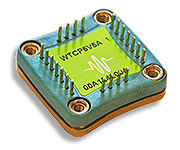
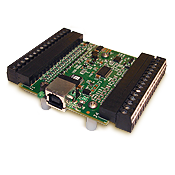 Computer Control for Your Wavelength Laser Drivers and Temperature Controllers — Now with 64-bit Compatibility